

Science today for a healthier tomorrow

The clock that the expectation around
indicates your lifespan

All sorts of clocks

We all know different kinds of clocks. The ordinary clock on the wall tells us what time it is. A calendar shows how much time passes. When we talk about how old we are, we actually mean a “calendar clock” like that.

But there are also other clocks. Clocks that indicate whether we are biologically older or indeed younger than that chronological age. We call these types of clocks epigenetic clocks.

Explanation of the concept
If you measure the body clock of a large group of 50-year-old men, you get an average. Your own value can lie above or below that. That difference shows whether your body is younger or older relative to that calendar clock.

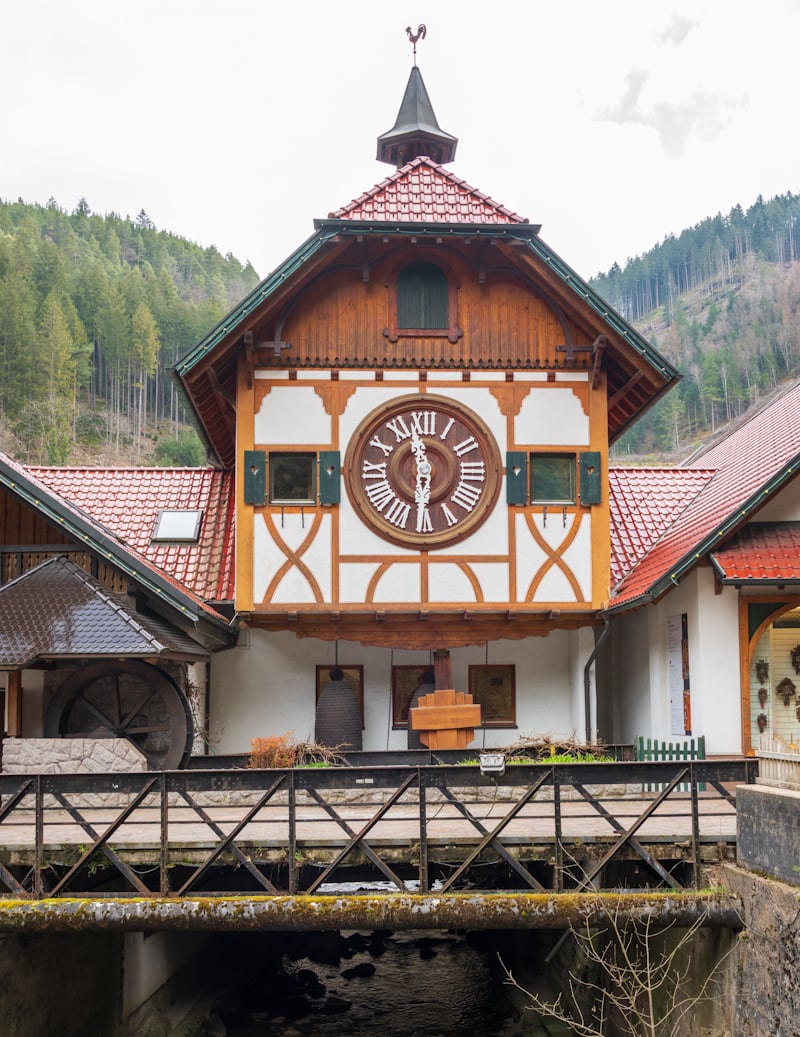
Largest cuckoo clock in the world

We can also measure the rate of ageing

Also speed

The amount of change in a given time is a measure of speed. In ageing, we see this reflected in changes to the epigenetic clock. In addition to the body's current status, this also allows us to see how fast ageing is progressing.

Meet the epigenetic clock

In the following video we meet Steve Horvath, the inventor of the epigenetic clock. Horvath discovered more or less by chance the connection between where those flags are located and someone's age. The idea is therefore simple and it concerns something that happened to be based on statistical research has been discovered.

Steve Horvath (photo) demonstrates using statistical data that the position of the shutters forms a highly accurate epigenetic clock: a way of measuring a person's biological age. 

(https://creativecommons.org/licenses/by-sa/4.0/)

  1. Click on the CC button

2. Click on the cog

3. Click on Subtitles

4. Click on Auto translate

5. Click on Dutch

6. Ready

Summary

In this TEDx talk, Steve Horvath, the creator of the famous clock, explains in a very accessible way why this is such a major breakthrough. We provided additional explanation on a number of points.

1. What is the exact time?
Horvath compares ageing to “rust on the DNA”. We have previously drawn the comparison with scratches on a CD. Our DNA changes chemically as we grow older through a process called DNA methylation. In fact, this involves a change in the epigenome, though Horvath avoids using that term for now. The clock looks at these chemical changes to determine the exact biological age of a cell or tissue.

2. The big discovery:
Horvath discovered by chance that the signals of ageing in the DNA (read: of the epigenome) are so strong that he could build a clock that works for every tissue in your body. Whether you take a blood cell, a piece of skin or a liver cell, the clock can tell how old you are. He now even has a clock that works for all mammals, from mice to whales. Because it is effectively about the epigenome, we now speak of the epigenetic clock.

3. Why is this useful?
Risk prediction: People whose “epigenetic clock” ticks faster than their actual age (chronological age) have a higher risk of disease and a shorter life expectancy. The newest version of the clock, called “GrimAge” (after the ‘Grim Reaper’), can even predict quite accurately when someone will die based on a blood test. Addition: at least if you carry on with the lifestyle you have!

Drug testing: The clock is a quick way to see if a new anti-ageing treatment really works. Instead of waiting 30 years to see if test subjects live longer, we can now see after a few months whether their “DNA clock” has slowed down or even been reversed.

4. Is rejuvenation possible?
Horvath shares an exciting result from a small clinical trial in which participants were given a cocktail of medications for a year. The results showed an age reversal of 2.5 years. This means that for the first time we have scientific evidence that we can not only stop the biological clock, but also turn it back a bit.

5. His conclusion
Although a healthy lifestyle (eating vegetables, not smoking, exercising) helps, according to Horvath it is not enough to become extremely old (such as 123 years). For that we need more powerful medical interventions, and the epigenetic clock is the most important tool to find and prove those interventions.

A curious side-effect

There is a special site: Rejuvenation Olympics on which an online leaderboard is indicated.

On this online leaderboard, hundreds of people worldwide compete for the title of “best rejuvenator”. They do this by having their biological ageing rate measured via epigenetic tests (such as the Horvath clock or the newer DunedinPACE test).

This under the motto “Pushing the boundaries of longevity” (loosely translated: pushing the boundaries of “how long you can live”).

Bryan Johnson

Bryan Johnson is the figurehead of this movement. His project, called Project Blueprint, is extremely intensive. To turn back his biological clock and make his organs function like those of an 18-year-old, he does the following, among other things:

SupplementsHe swallows more than 100 pills a day.

DietA strict vegan diet of exactly 1,977 calories a day, with his last meal often before 11:00 am.

SleepHe goes to sleep at the exact same time every night, alone, in a completely darkened room.

MeasurementsHe has his weight, BMI, body fat percentage, blood sugar and heart rate variability measured daily, and undergoes dozens of medical procedures (such as ultrasounds and MRIs) monthly. 

Conclusion: Not immediately the lifestyle we would wish upon someone, but in itself the project is very interesting.

Bryan Johnson

  1. Click on the CC button

2. Click on the cog

3. Click on Subtitles

4. Click on Auto translate

5. Click on Dutch

6. Ready

We are now showing an interview with Bryan Johnson

A separate section on epigenetic clocks

We consider the epigenetic clock so important that we have dedicated a separate part of this series to it.
In that section we also discuss all sorts of practical matters, such as:

– what offers are available
– how things stand regarding the accuracy
– how you supply the samples with which the tests are carried out

Answer first and only then click on the question to see what our answer is

Answer: A calendar clock shows how old we are in years. It concerns the time that has elapsed since our birth, thus our chronological age.

Answer: An epigenetic clock indicates whether our body is biologically older or younger than our chronological age. This clock looks at changes in the epigenome.

Answer: They can also show how quickly someone is ageing. By measuring changes over time, we gain insight into the rate of ageing.

Answer: If your epigenetic age is higher than average, you are ageing faster. If it is lower, you are ageing more slowly and your body is biologically younger.

Answer: Because he demonstrated that ageing is measurable via changes in the DNA (epigenome). His clock works for various tissues and makes it possible to measure ageing and interventions.