Science today for a healthier tomorrow
We now understand what the epigenome involves. In doing so, we drew the comparison with the head chef who decides which recipe from the cookbook (DNA/genes) is used.
The most important step forward is that, alongside the mapping of the human genome (The Human Genome Project, 2003), the epigenome has now been mapped by the Human Epigenome Consortium.
However, “mapping” the epigenome does not mean we are making one fixed map, but rather that we are systematically recording how genes are switched on and off — and how this changes under the influence of age and lifestyle.
In short, mapping it here means that we are putting all the knowledge we gather about that epigenome into a capture in a structured way.
When it comes to the epigenome, it is naturally about being able to store your knowledge about measurements in a structured way so that you can interpret measurements better.
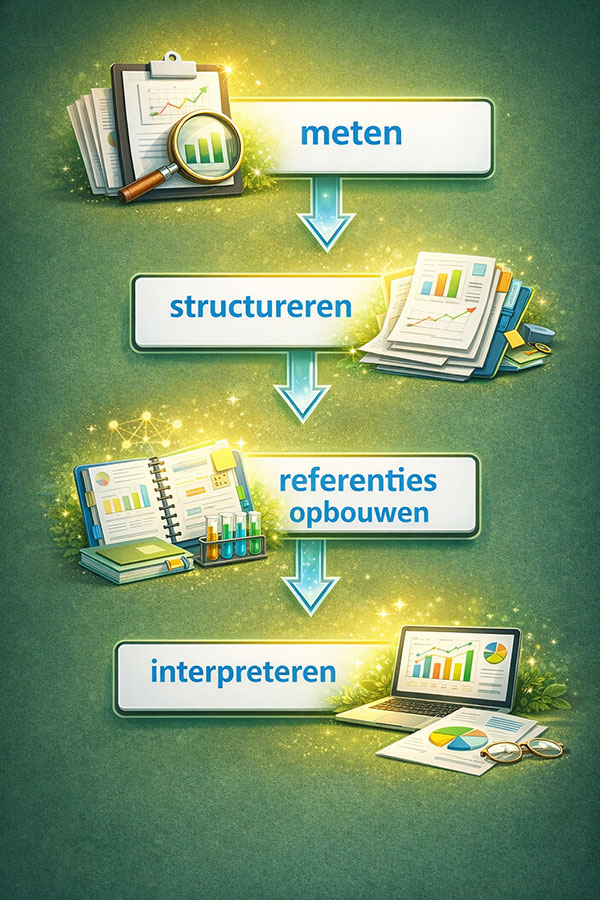
In fact, this happens by:
1. The measurement
You measure at thousands to millions of places (CpG sites) where methylation is present. That yields a huge amount of data.
2. Structuring
That data is ordered:
– per gen
– per cell type
– by age group
– per health status
3. Building references
By measuring a great many people, patterns emerge:
– what goes with young?
– what belongs to old?
– what goes with illness?
This is how the so-called reference cards are created.
4. Interpreting
Only through those reference charts does an individual measurement gain meaning:
– is someone ahead of or behind their biological age?
– which systems are under strain?
This is where applications such as the epigenetic clock (e.g., Steve Horvath's) come from. We will go into more detail about this in the final section.
We are now introducing a new concept: the histone.
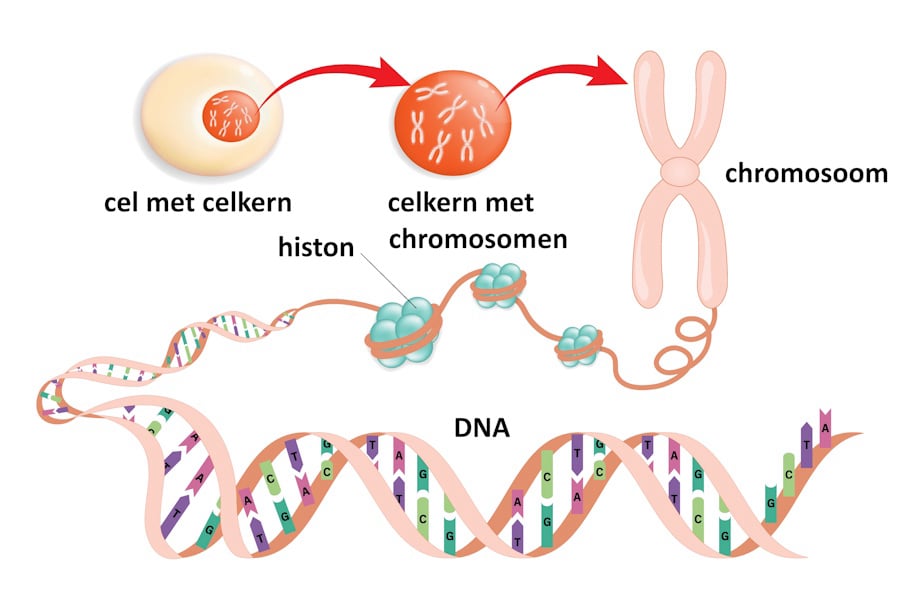
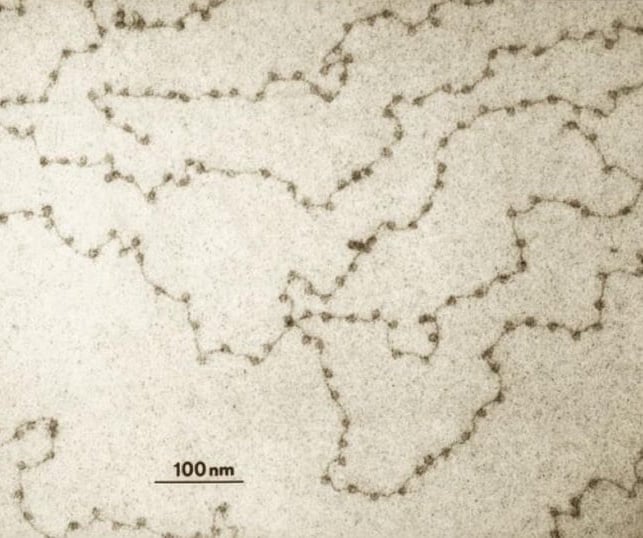
You can think of histones as little “spools” that the DNA is wrapped around.
There is about two metres of DNA inside a single human cell. That has to be stored in a cell nucleus that is only a few micrometres in size. So, a clever way is needed for that.
What are histones?
Histones are globular proteins that act as a kind of spool. The DNA wraps around the histones.
A group of eight histones with DNA wrapped around it is called a nucleosome.
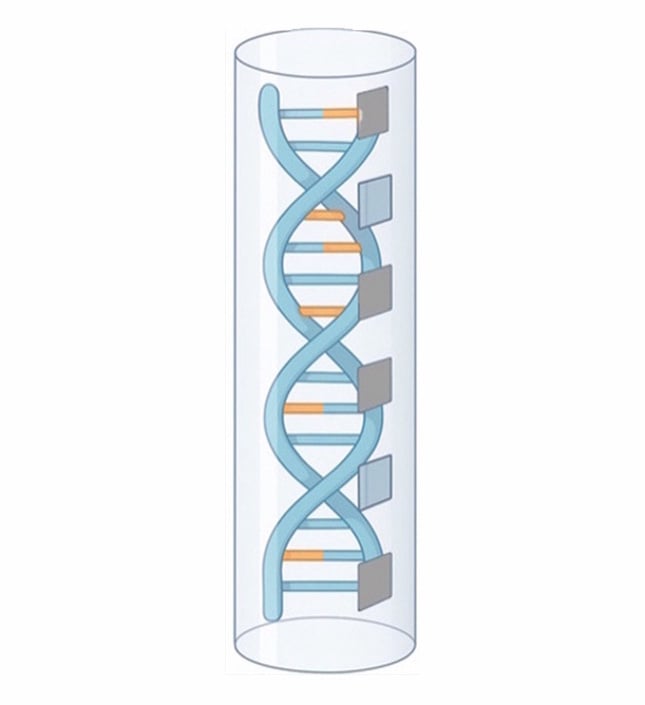
We have previously seen that flags can be placed on the DNA (methylation). Those flags indicate whether or not a gene may be used. Now a second mechanism is added to this: the histones.
Histones determine how tightly or loosely the DNA is coiled.
You can compare it to a thread wound tightly around a spool, with the result that:
(1) Tightly rolled (rolled out).When the DNA is tightly wound around the histones, the cell cannot access it properly. The gene is then switched off.
(2) Losser dismantled (gen on). When the DNA is wrapped more loosely around the histones, the cell is able to read it. The gene is then switched on.
How do these two work together?
You can look at it this way:
(a) Histones determine whether the DNA region in question is open or closed
(b) Applying flags (methylation) extra signals relating to the switching on or off of certain parts of the DNA.
Together they determine the mechanism of the epigenome.
We won't go into it any further.
Answer: Histones are proteins around which DNA is wound. You can think of them as tiny spools on which the DNA is rolled up.
Answer: A nucleosome is a group of eight histones with DNA wrapped around them.
Answer: Tightly coiled: the cell cannot reach it → the gene is switched off.
Uncoiled: the cell can read it → the gene is switched on.
Answer: Methylation (little flags) provides extra signals as to whether a gene should be switched on or off.
Together they form the epigenome.
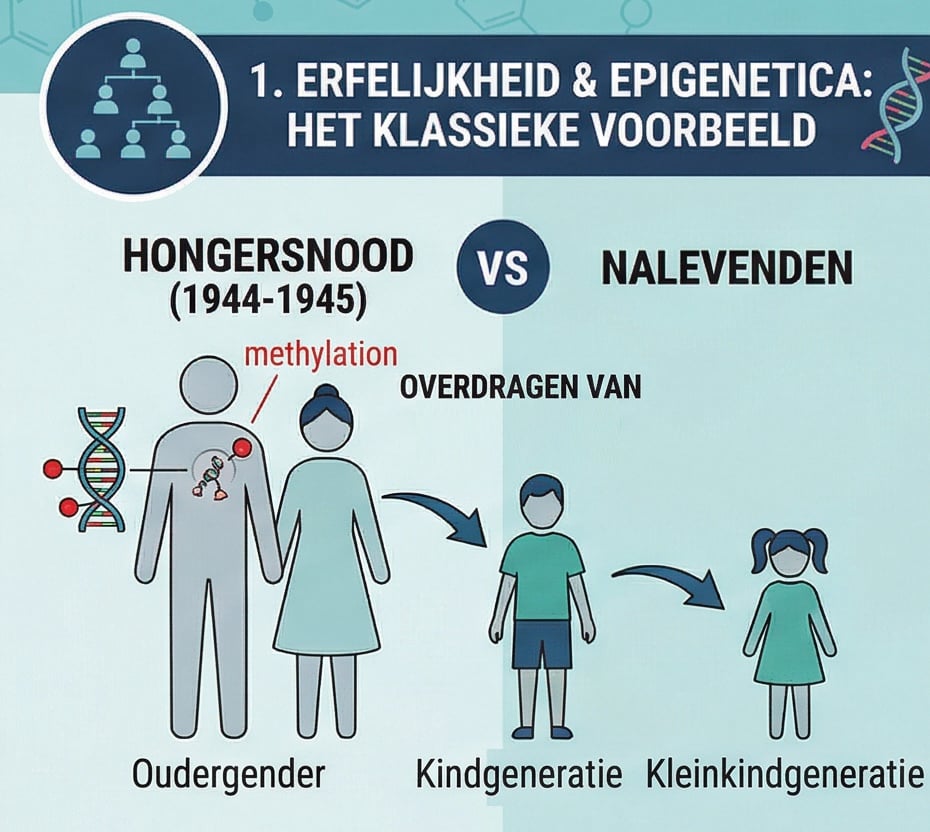
Historical research into victims of the Dutch famine is the classic example of epigenetic inheritance. The traumatic experience resulting from the famine caused chemical markers on the DNA (methylation) and those markers were passed on to subsequent generations, without the genetic code itself changing.
Heredity definitely belongs among the characteristics of the epigenome.
Dr Karl Goldkamp's video explains how the Dutch Hunger Winter (1944-1945) served as an unintended scientific experiment that laid the foundations for epigenetics.
The essence
Due to a German blockade, calorie intake in the western Netherlands dropped to approximately 500 kcal per day. Decades later, scientists discovered that this famine disrupted the methylation cycle (the process that switches genes on or off) in unborn children. Although their DNA code did not change, the expression of their genes was permanently altered.
Main consequences
Programming of disease: Babies who were exposed to famine during early pregnancy developed obesity, diabetes and schizophrenia more often in adulthood. Their bodies were set for scarcity, but ended up in a world of abundance.
TransferableThese modifications thus appeared to be transferable to subsequent generations (grandchildren).
Coeliac breakthroughDue to the absence of wheat during the famine, it was discovered by chance that gluten is the cause of coeliac disease.
Conclusion
The conclusion is that the environment in the womb is crucial for health later in life; this concept is known as the fetal origins of adult disease.
Besides the way DNA is wound around histones and the fact that epigenetic characteristics can be partly heritable, there are a few other important features of the epigenome. A first point is that the epigenome is dynamic: it constantly changes under the influence of lifestyle, diet, stress and the environment.
In addition, the epigenome is cell-specific. Although all cells have the same DNA, the epigenome determines which genes are active in a given cell. This is how differences arise between, for example, a muscle cell and a nerve cell. Furthermore, the epigenome is reversible. This means that changes are not permanent, but can in principle be altered. This is what makes the epigenome so interesting for longevity: we may be able to influence it.
Finally, the epigenome plays a role in ageing and disease. Changes to these DNA “control knobs” are linked to how fast we age and how healthy we remain.
We will elaborate further on that last point in the next chapter.