Science today for a healthier tomorrow

From idea to reality

1. The origin of the term epigenetics

The term epigenetics was first introduced in 1942 by the British embryologist and geneticist Conrad Waddington. 
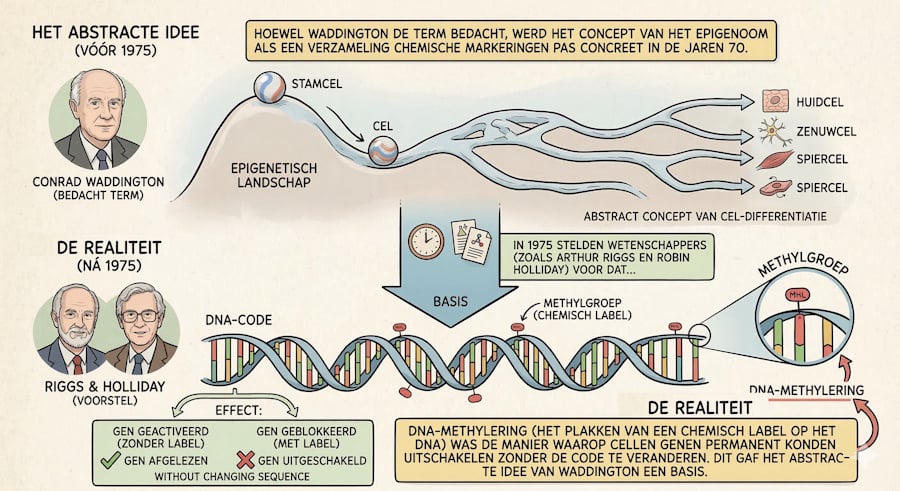
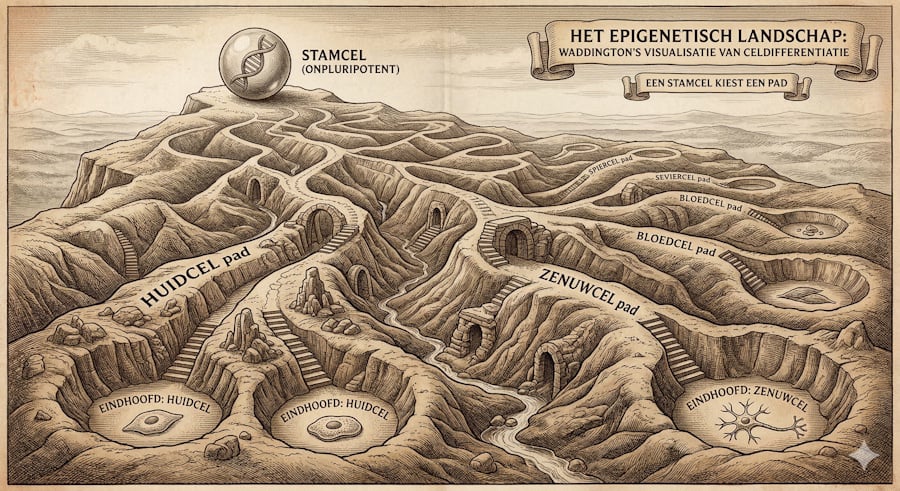
In this image you can see the famous “Waddington landscape”. At the top lies a cell that still has every possibility.
We call such a cell stem cell. when it comes to differentiation
During development, this cell effectively rolls downwards and ends up on different pathways. Each pathway leads to a different type of cell: for example, a skin cell, a blood cell or a nerve cell.

Waddington used this image to make it clear that a cell chooses a certain direction step by step.
Once on a path, it becomes increasingly difficult to change direction.

What Waddington did not yet know was what precisely determines that choice. In his time, that was still an open question. Only later did we discover that a control mechanism exists which determines which direction a cell takes. We now call that mechanism the epigenome.

2. The big breakthrough

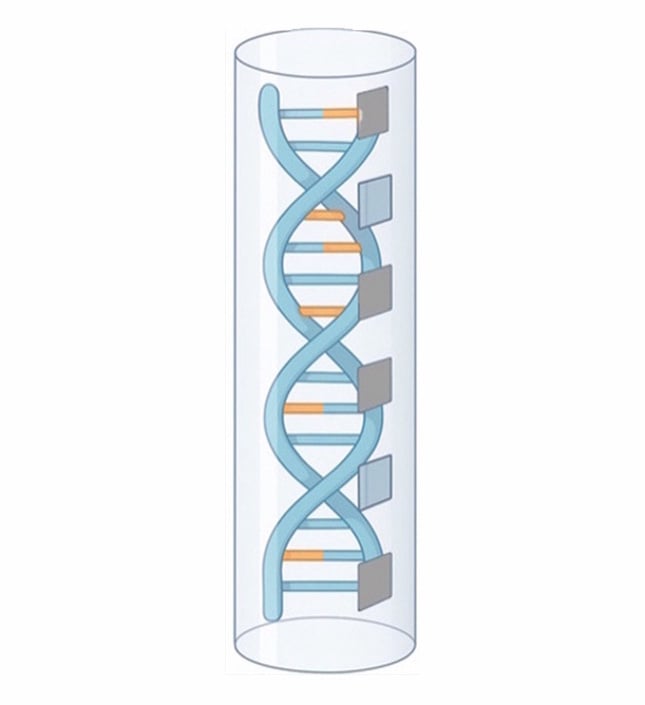
The major breakthrough came when scientists discovered that certain chemicals can be attached to DNA.
You can see that like little flags indicating which parts of the DNA are active and which are not.

We call the attachment of those substances methylation, and what that bond looks like precisely is not important to us right now.

In 1975, Arthur Riggs and Robin Holliday proposed that it is precisely these flags that determine the switching on and off of genes. 

That made something important clear: the genetic code itself does not change. But which genes are expressed or not does. And by determining which genes are switched on and which are switched off, it changes how the cell behaves. And precisely that finally gave Waddington's abstract idea a firm, scientific basis.

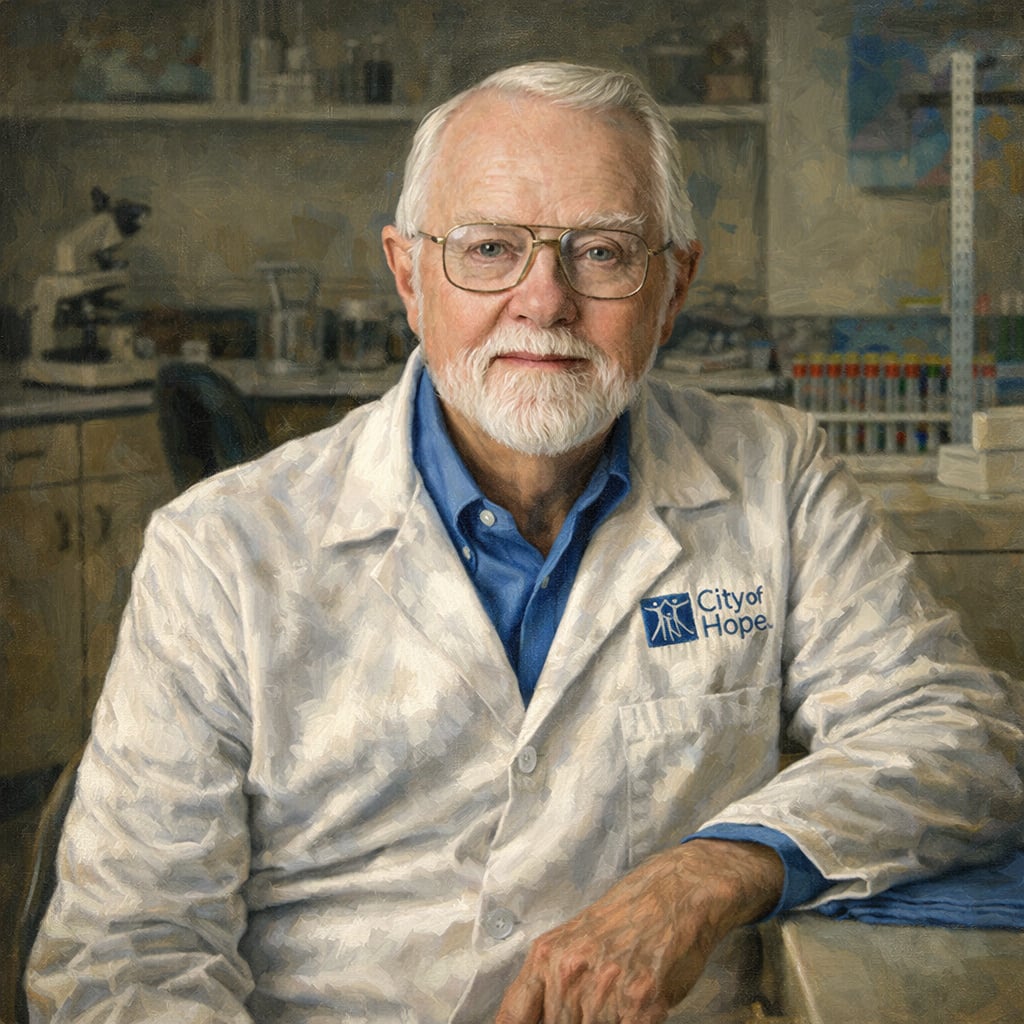
Arthur Riggs (1939 – 2022)

How did Riggs and Holliday come up with their idea?

In 1975 it was mainly about brainpower and indirect evidence, not about direct observation. They combined various observations:

1. Genes can remain permanently “switched off”
Scientists observed that some genes in cells remain switched off for a long time, even after cell divisions. There had to be some kind of memory behind that.

2. DNA does not change
The genetic code remains the same. So the explanation had to lie elsewhere.

3. Chemical changes to DNA were already known
It was already known that small chemical groups (such as methyl groups) can be attached to DNA.

Their insight: 
(1) perhaps those small chemical changes cause genes to remain switched on or off
(2) and perhaps those changes are passed on during cell division

That was a theoretical model,
a brilliant idea that was later confirmed

3. The technological breakthrough

Although the mechanism was proposed as early as 1975, for a long time we could not truly measure the epigenome. That changed thanks to new technology.

Genome project
Following the completion of the Human Genome Project in 2003, it became clear that DNA alone was not enough to explain diseases and ageing.

After that, things moved quickly.
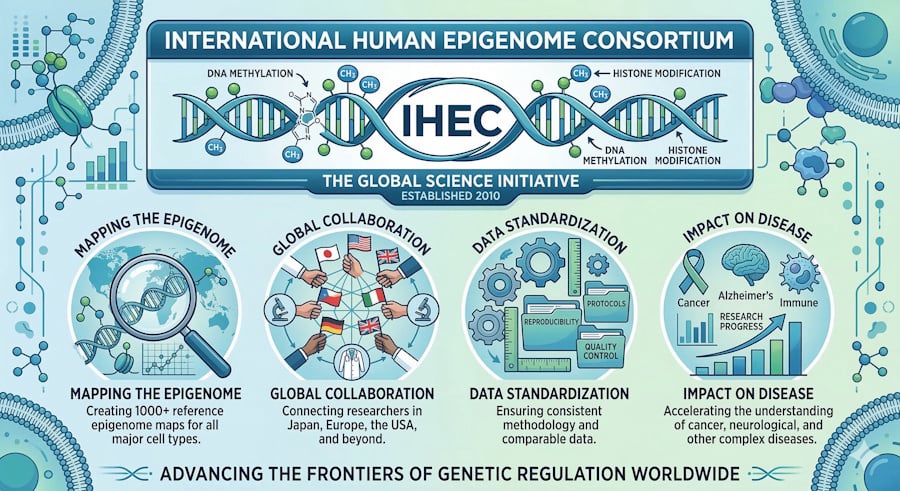
The International Human Epigenome Consortium was established in 2008.
Scientists all over the world collaborated to map the epigenome.

IHEC: International Human Epigenome Consortium There is a great deal of information here. It is about mapping data, through global collaboration, standardising the information (Data Standardization) and linking that data to diseases (Impact on diseases)

The first maps
In 2015, the first major “maps” of the human epigenome were published. With the term “maps”, one should of course mainly think of large amounts of data that were stored. From that moment on, the epigenome was no longer just an idea, but a visible and measurable system.

More precisely: CpG sites

Because we can measure where methylation takes place, we are gaining a better insight into the question of how our bodies are doing.

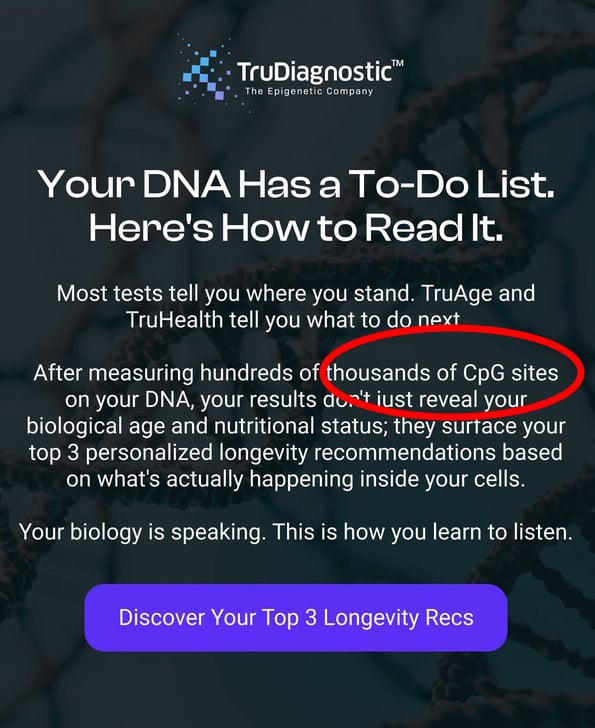
Here you can see an example of a company that offers this type of measurement: TruDiagnostic. It states:
After measuring hundreds of thousands of CpG sites on your DNA, your results don’t just reveal your biological age and nutritional status…”Or translated: Nmeasuring hundreds of thousands of CpG sites on your DNA reveals not only your biological age, but also something about your nutritional status.

But what exactly are those CpG sites?
You know that DNA is made up of four letters: A, T, C and G.
A CpG site is a place where a C (cytosine) is directly followed by a G (guanine). You can think of such a place as a potential spot for a “flag”. We call that flag methylation.

Important to remember
The CpG site is the location, the flag is the methylation

The letter “p” in CpG refers to phosphate. That is a chemical detail you don't need to remember right now.

What is important, though: we now have a biological clock

By measuring where those tags are located, it turns out that we are getting better and better at estimating how fast someone is ageing and what condition their body is in. That is possible because we nowadays know a lot more about the epigenome — the system that determines which pieces of DNA are active and which are not. Measurements of this kind are known as “reading the biological clock”. In 2013, Steve Horvath developed the first widely applicable epigenetic clock (the so-called Horvath clock). We'll go into a bit more detail about that in a moment.

It gets even more interesting when you know thand the warning signs are also influenced by your lifestyle. 
In other words: what you do — such as eating, exercising and sleeping — influences how your genes are controlled. 

Take a look at the video by Annelies Pattyn, general practitioner and lifestyle medicine expert.

Conclusions

Ultimately, we always keep coming back to those “little flags” on our DNA: methylation. They may seem invisible, but they tell us an awful lot. They show which genes are active and which are not. 

If we can see (can measure) what is happening, we can also better understand what we can influence. Those little flags form, as it were, the anchor point: a reference point to track how your body responds to your lifestyle — and where you can make adjustments. Adjustments will then no longer be based on intuition or general advice, but based on what is really happening in your cells.

And that is what makes it so special:
– we cannot just work on a longer healthspan,
– we are also increasingly able to see what has an effect.
Finally, an English video explaining the concept once more.

  1. Click on the CC button

2. Click on the cog

3. Click on Subtitles

4. Click on Auto translate

5. Click on Dutch

6. Ready

Brief summary

In this video, Dr Rhonda Patrick explains the concept of epigenetic ageing. While our chronological age is fixed, our biological age varies based on how our body is actually ageing [00:13]. This process is measured via DNA methylation, whereby methyl groups switch genes on or off [00:50].

Dr Steve Horvath developed the ‘Horvath clock’, which can accurately determine biological age and predict risks of diseases such as cancer [01:20]. Fascinating research suggests that we might be able to turn back this clock; a small study showed that medication use reduced epigenetic age by 2.5 years [02:23]. The big question remains whether ‘younger’ DNA actually leads to a healthier, longer life [02:39].

Answer first and only then click on the question to see what our answer is

Answer: A CpG site is a place on the DNA where the letter C is immediately followed by the letter G.

Answer: That is methylation: a chemical addition that determines whether a gene is switched on or off.

Answer: The CpG site is the place on the DNA. Methylation is the flag that can be present at that place.

Answer: You can measure where methylation is located and thus say something about biological age and the condition of the body.

Answer: The “p” in CpG stands for phosphate.

Answer: Lifestyle (such as nutrition, exercise and sleep) affects where the flags are located and therefore how genes function.