Science today for a healthier tomorrow
Here is a summary of the video “Top 5 Supplements To Reverse AGING Dr David Sinclair” by the channel Yourself Your Health. The video discusses the broader lifestyle and regime of Dr David Sinclair (Professor of Genetics at Harvard Medical School) with which he claims to have drastically reduced his biological age [00:10]. The summary is divided into the five pillars covered in the video (click on the numbers):
Sinclair's basic principle for exercise is short, intense workouts to the point where you can no longer hold a conversation [01:06]. This induces a mild state of hypoxia (oxygen deprivation), which signals the body to switch on cellular defence mechanisms, improve blood circulation, and slow down ageing [01:14].
He maintains a strict eating window of about 6 hours a day [01:53]. By depriving the body of food for longer periods, autophagy is stimulated (the process by which cells clean and repair themselves) and the production of sirtuins (longevity proteins) increases [02:21].
Within his eating window, he specifically chooses plants that have been under stress (such as through drought or nutrient deficiency), because these are rich in polyphenols [02:37]. His diet includes, among other things:
Leafy vegetables, nuts and pulses [03:11].
AvocadosRich in healthy fats and oleic acid to activate longevity pathways [03:34].
Cantaloupe (melon): Because of the low sugar content and the hydration [03:59].
Blueberries and blackberries: Powerful antioxidants full of polyphenols [04:15].
Please note: Sinclair shares this as his personal regimen and is not promoting any specific brands [04:49].
ResveratrolKnown from red wine; he takes this every morning in concentrated form (mixed with yoghurt) to activate sirtuins [04:56].
NMN (Nicotinamide Mononucleotide)A form of vitamin B3 and a precursor for NAD+. Since NAD+ levels decrease with age, he uses NMN to keep these levels at a youthful level [05:21].
Metformin A medication that is normally prescribed for type 2 diabetes. Although he does not have diabetes, he takes it for its potential anti-ageing benefits, such as regulating blood sugar levels and lowering the risks of age-related diseases.
In order not to disrupt the natural anti-aging mechanisms, he leaves out the following things [06:26]:
Refined sugarsTo prevent glycation (caramelisation) of proteins and inflammation [06:39].
Carbohydrates (bread and processed grains)To keep blood sugar levels stable [07:02].
MeatHe prefers plant-based proteins because they are less inflammatory [07:24].
DairyHe completely cut them out to avoid animal fats that trigger ageing pathways [07:46].
AlcoholHe heavily downplays this; for him, the disadvantages do not outweigh the potential advantages [08:02].
When it comes to what he avoids, we arrive at advice that we find in most books:
Watch out sugar
2 watch out with carbohydrates (bread and processed cereals)
3 meat, no rather plant-based
4: watch out for dairy because animal fats can initiate ageing
watch out for alcohol
What does not fit with the advice we usually encounter is:
resveratrol
2. NMN (via NAD plus)
metformin
This is specifically about supplements focused on longevity.
Classic goal (Prevention): The traditional goal of supplements is prevention. It is about preventing a deficiency that could easily lead to a specific disease. For example, you take vitamin D to keep your bones strong in old age.
Modern goal (Longevity): Longevity supplements (such as NMN, Resveratrol or Spermidine) are not taken because someone is deficient. Nobody has an “NMN deficiency”. But the goal now is the extension of life.
The goal here is to artificially stimulate processes in the cell that are likely(??) likely to be important for living longer. As you saw in Sinclair's video regarding the concept of “misleading the cells into thinking the body is in a state of scarcity (fasting/exercise)." This then has the effect of keeping survival and repair mechanisms permanently switched on.
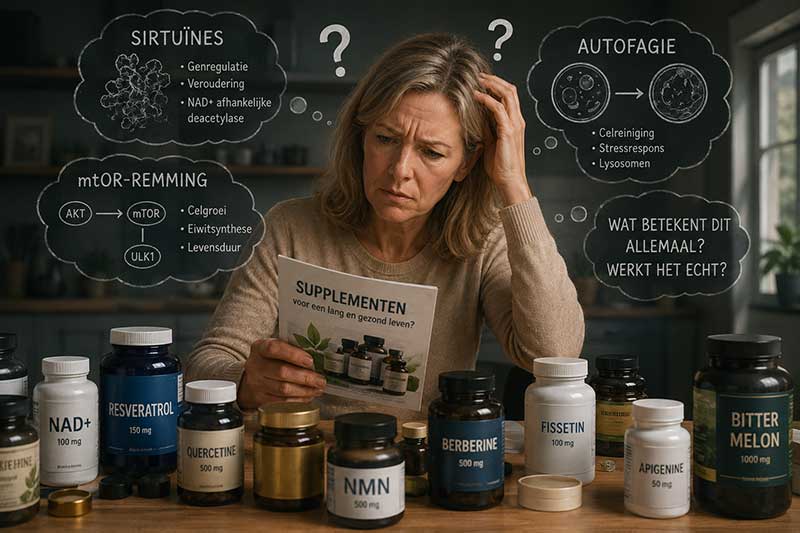
By the way, we immediately see a problem here: terms used in the health education, such as sirtuins, mTOR inhibition and autophagy, usually mean nothing at all to the layperson. Laypeople — and that is most people — generally have no background whatsoever to properly oversee how supplements work.
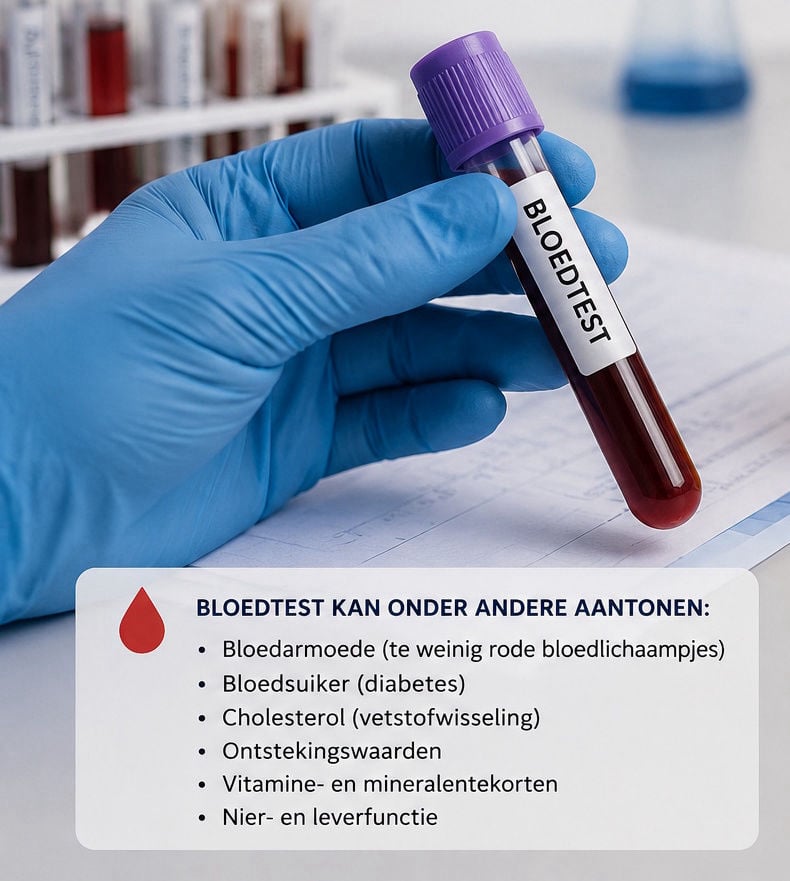
In the past: measure the success of a supplement using simple blood values. The illustration shows the few known situations involved in a blood test.
Longevityin longevity, you see a completely different approach. DNA methylation (the epigenetic switches on your genes) is looked at to measure whether your “biological age” is lower than your chronological age. We have covered this extensively in the section “Your Age Clock”.
Supplements are now marketed with the promise that they can reverse or slow down this epigenetic clock. This is a measurement method that simply did not exist in the consumer market twenty years ago.
Bear in mind that there is often still considerable debate as to whether promises are actually fulfilled!
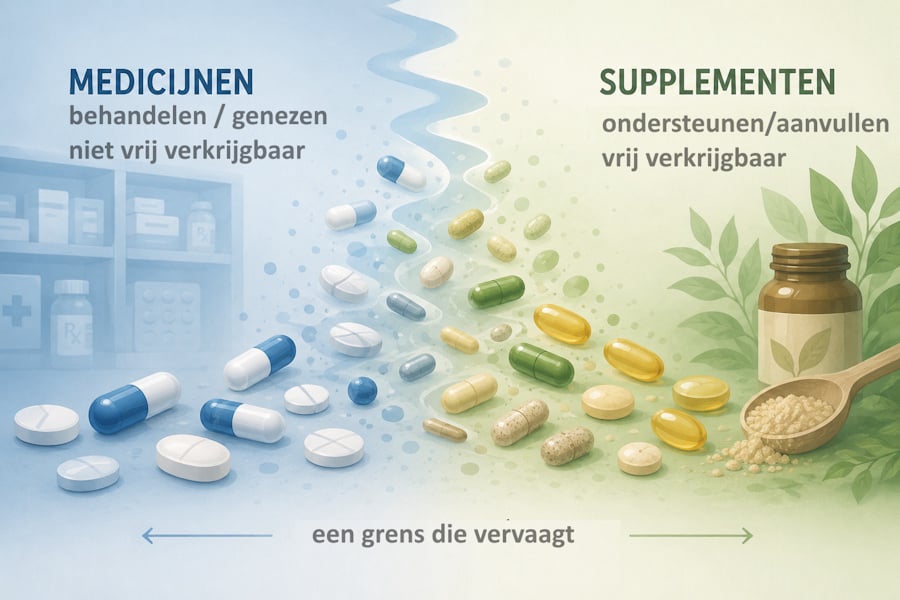
Because longevity focuses on the deep biological causes of ageing, you can see that the boundary between a simple food supplement and a heavy medicinal product is increasingly blurring.
Take Metformin (a diabetes medication) or Rapamycin (a drug used in transplant patients to prevent rejection) for example. In the longevity world, some people also use these agents for a purpose other than that for which they were originally approved, namely to influence cellular ageing processes.
Controversy also arose around NMN. Over the past few years, the US FDA — the agency that evaluates medicines — has wrestled with how this substance should be classified. Because NMN has a strong impact on biological processes, some pharmaceutical companies wanted to have it registered as a medicine. This sparked a legal debate over whether NMN may still be sold as a “food supplement”.
The market is responding to this on a massive scale. Whereas the target audience used to consist mainly of older people or those with health problems who wanted to recover something, longevity is now also targeting twenty-, thirty- and forty-somethings who want to try to slow down ageing at an early stage.
It is no longer just about lifespan (how long you live), but above all about healthspan: how long you remain healthy, active and vital.
Companies are therefore no longer just selling individual vitamins or supplements, but complete longevity programmes. These include, for example, DNA tests, biological age measurements, personalised lifestyle advice and supplement combinations specifically formulated for one person.
Longevity has grown into a huge hype in recent years because various developments are coming together at the same time. In the past, we mainly saw ageing as something natural about which little could be done. Now, researchers are increasingly able to measure how fast someone is biologically ageing, for example with epigenetic clocks and DNA analyses. As a result, the idea is emerging that ageing is not only visible, but can also be influenced.
At the same time, artificial intelligence, biotechnology and new medical techniques are driving an enormous acceleration in research.
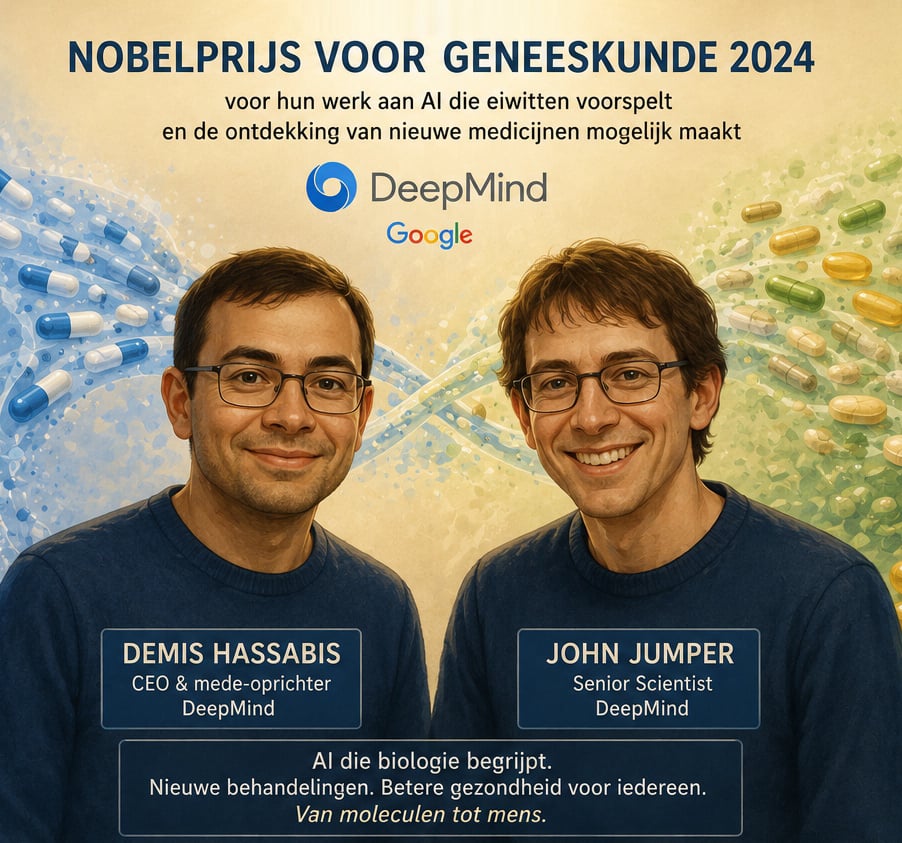
AI systems like Google DeepMind's AlphaFold demonstrate that computers can solve complex biological problems that used to take years.
Another factor is that the population is ageing rapidly. Governments, businesses and care organisations are therefore looking for ways to keep people healthy and independent for longer. In the process, the focus is shifting from simply “treating diseases” to “healthy ageing”. The concept of healthspan — the number of healthy years of life — is therefore taking centre stage.
Major investors are now pouring billions of dollars into longevity companies, supplements, tests and AI health systems. In addition, influencers and biohackers are popularising the subject on social media by constantly measuring and showing their biological age, sleep, diet and supplement use. This creates the feeling that longevity is no longer science fiction, but a new health revolution where technology, nutrition, medicine and prevention increasingly merge.
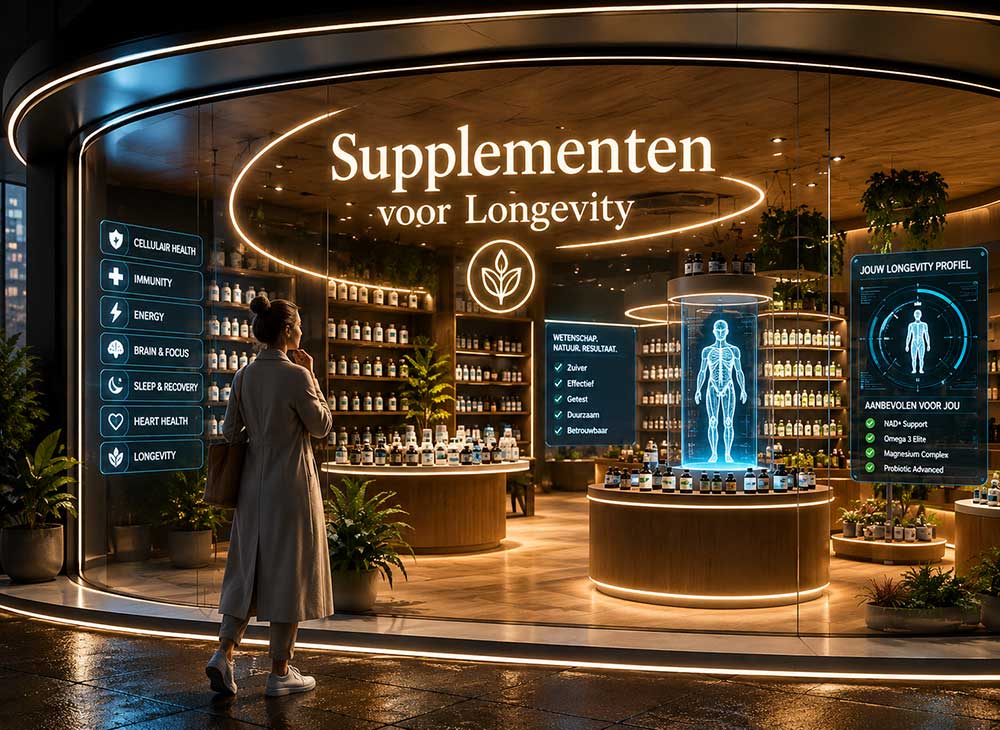
Because the goal (“living longer” or “cellular rejuvenation”) can only truly be proven in a human in 30, 40 or 50 years' time, the evidence is even harder to verify than with traditional prevention. As a consumer, you are buying a very long-term promise right now. Unfortunately, that makes this new target even more susceptible to the marketing and quackery we discussed earlier.
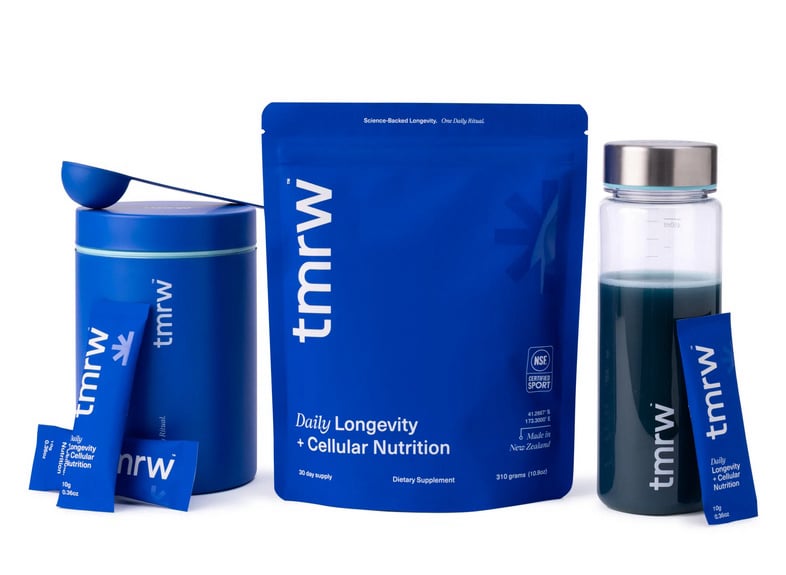
In most cases, people buy something because it has something nice written on the packaging, such as “Daily Longevity + Cellular Nutrition”.
Scientists are constantly investigating claims regarding the effectiveness of supplements. Despite the fact that the chemical details in this video are impossible for the layperson to follow, the conclusion is clear: according to this expert, there is no real evidence
Answer: Because this causes a mild state of hypoxia, which activates the body's repair and defence mechanisms.
Answer: Autophagy is the process by which cells clean and repair themselves. You can find that explanation by using our dictionary.
Answer: Because complicated terms like sirtuins, mTOR inhibition and autophagy are often used in the information provided. The entire background of cell biology is also unknown.
Answer: Because the effect of many longevity products can only truly be proven after decades. Added to that is the fact that everyone wants to live longer, and with that a new commercial market has been born.
Answer: Because new technologies such as AI, DNA analyses and epigenetic clocks give the impression that ageing is becoming more measurable and potentially influenceable.