Science today for a healthier tomorrow
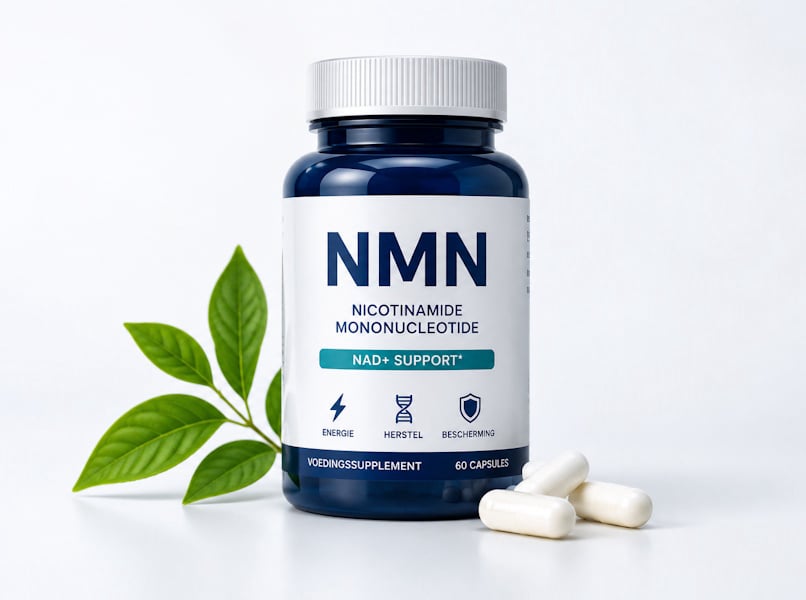
NMN became famous through research surrounding NAD+ and David Sinclair. The idea is that NAD+ levels decline during ageing. NAD+ plays an important role in energy production, DNA repair and sirtuins.
Why popular?
– linked to energy production in cells;
– related to mitochondria;
– possible effect on repair mechanisms;
– strongly linked to the idea of “cellular rejuvenation”.
Why argue?
– Much evidence still comes from animal research.
– It is unclear how much NMN actually gets into human cells.
– Long-term safety is not yet sufficiently known.
– There is debate as to whether effects in mice are translatable to humans.
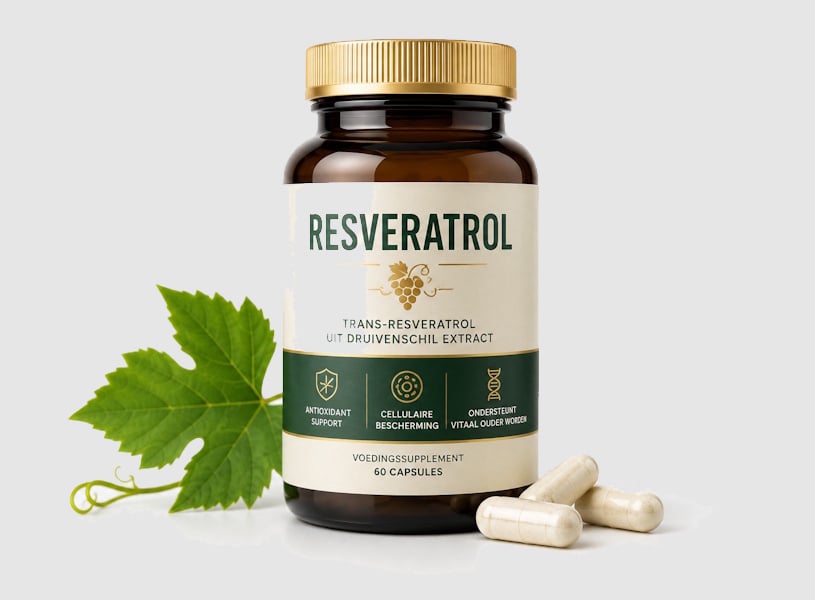
Resveratrol became world-famous because it was linked to sirtuins: proteins that are said to become active during fasting and stress.
Why popular?
– linked to “the French paradox” (see below)
– relationship with sirtuins;
– idea that it mimics the effects of calorie restriction;
– often combined with NMN.
Why argue?
– The absorption in the body is poor.
– Study results regularly contradict each other.
– Some researchers find the effects heavily exaggerated.
– There is as yet no convincing evidence that it makes people live longer.
The “French paradox” is a famous observation from the world of nutrition and health. Researchers noted that many French people:
– relatively fatty food (cheese, butter, cream, meat) and
– drinking wine regularly,
yet this group had a remarkably low incidence of cardiovascular disease compared to some other Western countries.
That seemed strange, because according to classical nutritional science, a high-fat diet should actually cause more heart problems. That is why it was called a “paradox”.
Later, the idea arose that red wine in particular might have a protective effect. This brought a lot of attention to the substance resveratrol, a natural compound found in the skins of dark grapes.
In the longevity world, resveratrol subsequently became extremely popular because:
– it was linked to sirtuins;
– which could mimic the effects of fasting or calorie restriction;
researchers thought that it could influence ageing processes.
Nowadays, scientists have a more nuanced view of the French paradox. Possible explanations are:
– smaller portions;
– move more;
– different eating habits;
– longer meals and less ultra-processed food;
– differences in the registration of heart disease;
I
– possibly a small effect of vine compounds such as resveratrol.
We have already encountered the term “sirtuins” a few times. Sirtuins are special proteins in our cells that are involved in:
– repair of damaged DNA;
– energy management;
– protection against stress;
– inflammatory reactions;
– ageing processes.
You can view them as a kind of “maintenance and repair team” for the cell. There are different types of sirtuins (SIRT1 to SIRT7). Some work mainly in the cell nucleus, others in the mitochondria (the cell's power plants).
Why are they so important in longevity?
The enormous interest in these proteins arose when researchers discovered that sirtuins become more active during:
– calorie restriction;
– against;
– intensive exercise;
– temporary stress for the body.
That was striking, because these very circumstances are often linked to:
– longer lifespan in laboratory animals;
– better cell protection;
– slow ageing.
The idea therefore arose that sirtuins might play an important role in healthy ageing.
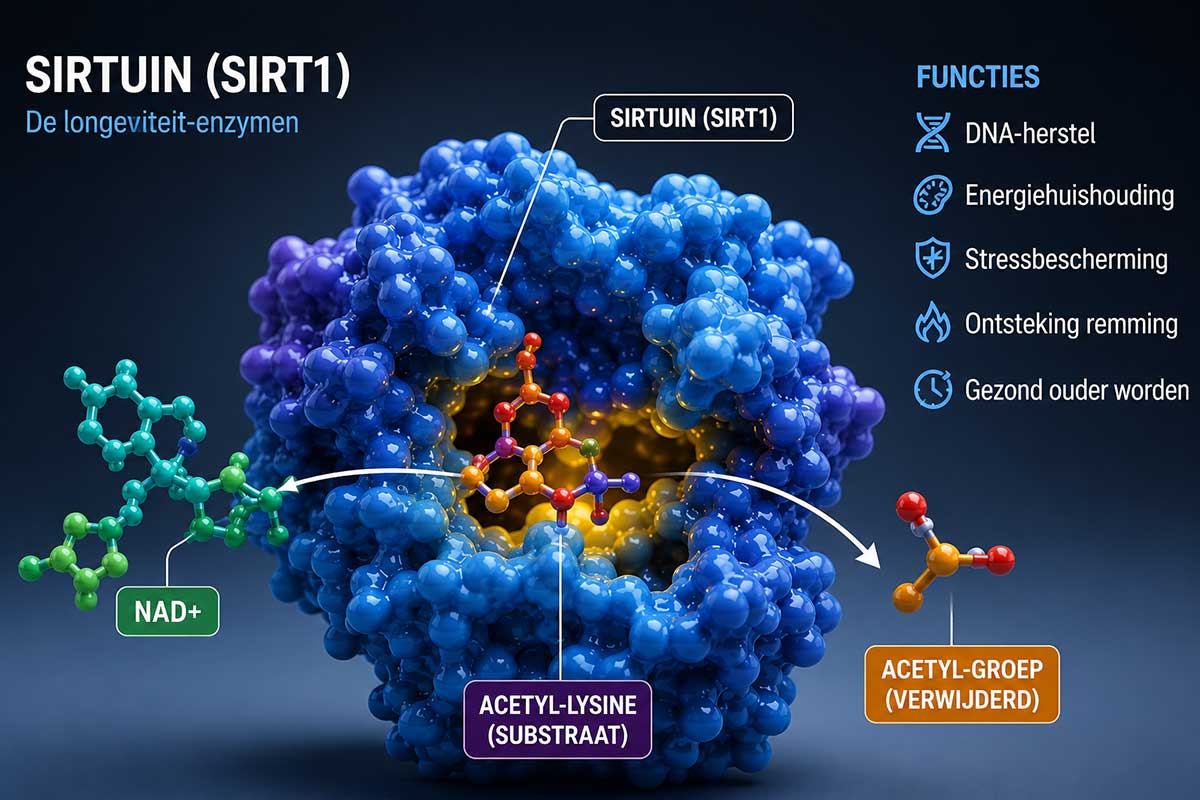
NAD+ binds to the sirtuin and helps the enzyme (the protein) to become active. Without sufficient NAD+, sirtuins are less able to do their job.
Subsequently, a protein with a so-called acetyl group binds to the sirtuin. In the diagram, that is called “Acetyl-Lysine (substrate)”. The word substrate simply means: the substance upon which the enzyme acts.
Because telomere length varies greatly between individuals and is also influenced by factors such as stress, smoking and lifestyle.
He looked at DNA methylation: small chemical alterations on the DNA that change predictably with age.
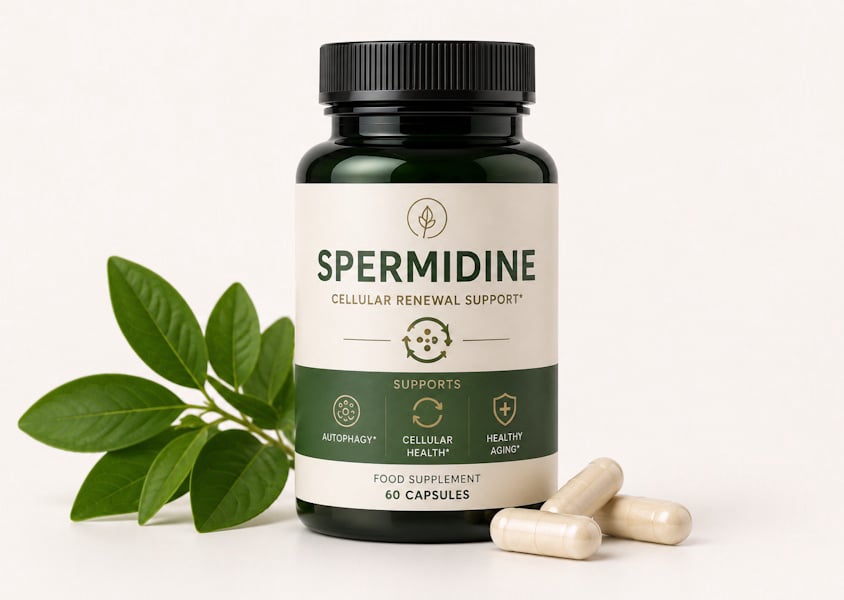
Spermidine gained attention because it was linked to autophagy: the natural clearance process of damaged components in cells.
Why popular?
– autophagy is a central longevity theme;
– linked to cell maintenance;
– beneficial for brain and heart;
– is often presented as “natural rejuvenation”.
Why argue?
– Much evidence for this also comes from animal research.
– Human studies are still limited.
– Uncertainty regarding optimal dosage.
– Still unclear how large the effect actually is.
What these three supplements have in common:
– they do not focus on a traditional shortage;
– they are trying to influence fundamental ageing processes;
– they have gained popularity through longevity podcasts, biohackers and social media;
– scientific interest is high, but definitive proof is still lacking.
That makes them simultaneously fascinating and sometimes also controversial.
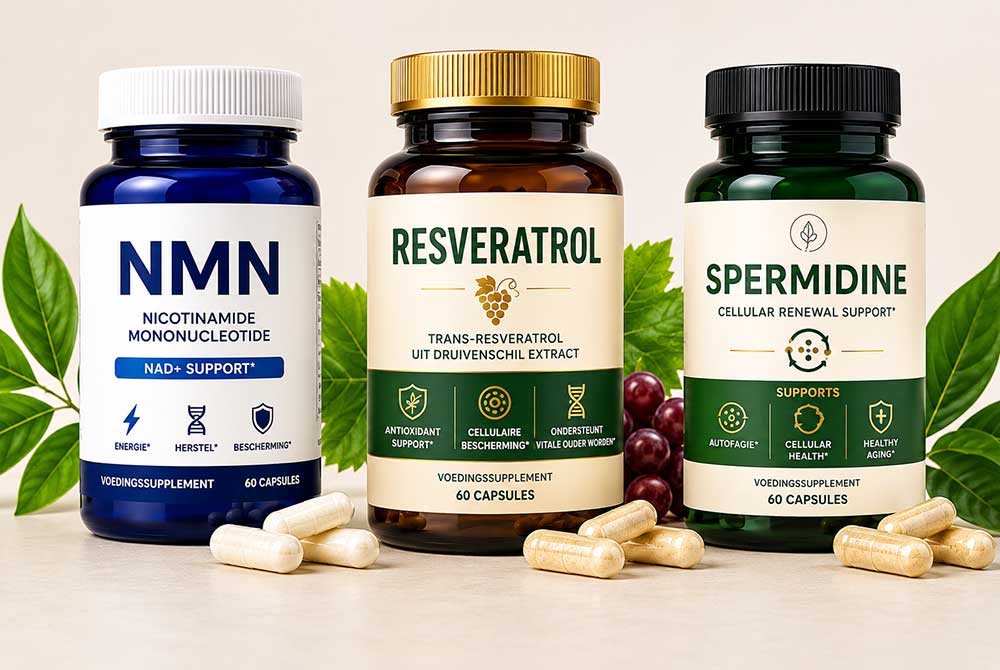
Supplements such as NMN, resveratrol and spermidine have become particularly well known due to the growing interest in longevity. Concepts such as NAD+, sirtuins and autophagy play a central role in this.
The research results are interesting, but there is still a lot of debate. Many studies have been carried out on animals and long-term effects in humans are often still insufficiently known.
A huge industry of supplements, tests and complete longevity programmes has since arisen around these substances. At the same time, scientific research into ageing has accelerated significantly in recent years due to new techniques involving DNA, epigenetics and biological clocks.
The main conclusion is therefore: longevity supplements are scientifically interesting, but many claims have not yet been definitively proven.