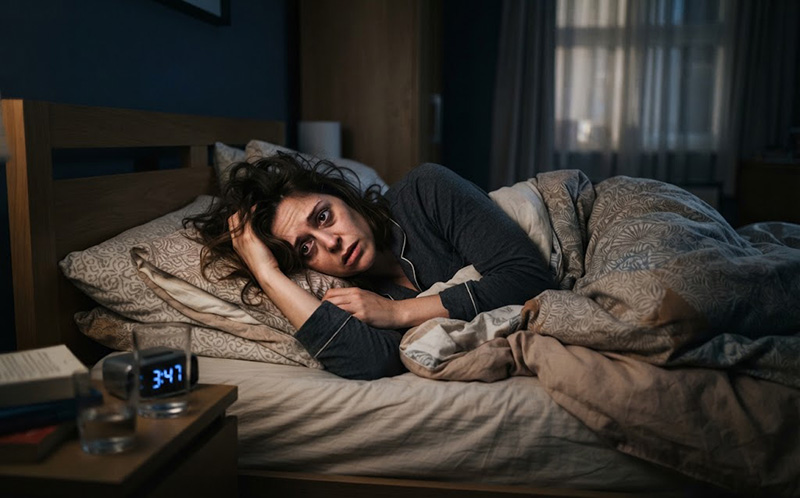
On sleep and sleep problems
A natural state of rest
Sleep is one of those factors that has a major influence on the epigenome. Sleep is a specific state of rest that is important both physically and mentally. During sleep, all kinds of systems in our body slow down, as a result of which:
– brain and body tissues can repair themselves;
– muscles can grow (especially during youth) and the immune system can strengthen;
– memory can continue to function well;
– emotional difficulties can be dealt with more effectively.
Sleep stages
Sleep consists of a number of so-called sleep stages. The body cycles through these sleep stages several times during the night, with the duration of each stage varying depending on age and other factors.
We will see that if certain stages are not properly completed, sleep problems may arise. In this course, we will focus primarily on the sleep problems experienced by older people. Generally speaking, the older a person is, the more likely they are to experience sleep problems. Chronic insomnia is, unfortunately, very common amongst older people and has a significant impact on their quality of life. This mainly refers to what we call insomnia, or the medical term “insomnia’ (also known as ‘insomnie’). There are still many unanswered questions regarding the treatment of these problems. In this course, we will discuss a number of ways to tackle these problems. In addition to insomnia, we may also encounter breathing problems (apnoea) and a condition known as ‘restless legs’, characterised by the constant movement of the legs.
How long do we sleep?
The amount of sleep a person needs varies depending on their age. Generally speaking, the recommended amount of sleep for adults is 7–9 hours a night. However, this may vary depending on age and other factors. The recommended sleep times for older people are as follows:
1. Adults (aged 18–60): 7–9 hours
2. Adults (aged 61–64): 7–8 hours
3. Adults (aged 65 and over): 7–8 hours
It is important to note that the amount of sleep a person needs can vary from person to person. For example, it is a well-known historical fact that Napoleon could manage on just four hours’ sleep.
It’s not just about quantity, but also about quality
It is also important to realise that the quality of sleep is just as important as the quantity (length of sleep). If you do not feel rested or are experiencing other sleep problems, it is important to speak to your GP to find possible solutions. Poor sleep is common amongst many older people.
Poor sleep
Poor sleep manifests itself in:
– having difficulty falling asleep;
– waking up early and feeling unrefreshed;
– experience this in the form of a loss of concentration;
– feeling tired;
– being easily irritated,
Older women generally have more health complaints than older men,
the biological clock
The biological clock
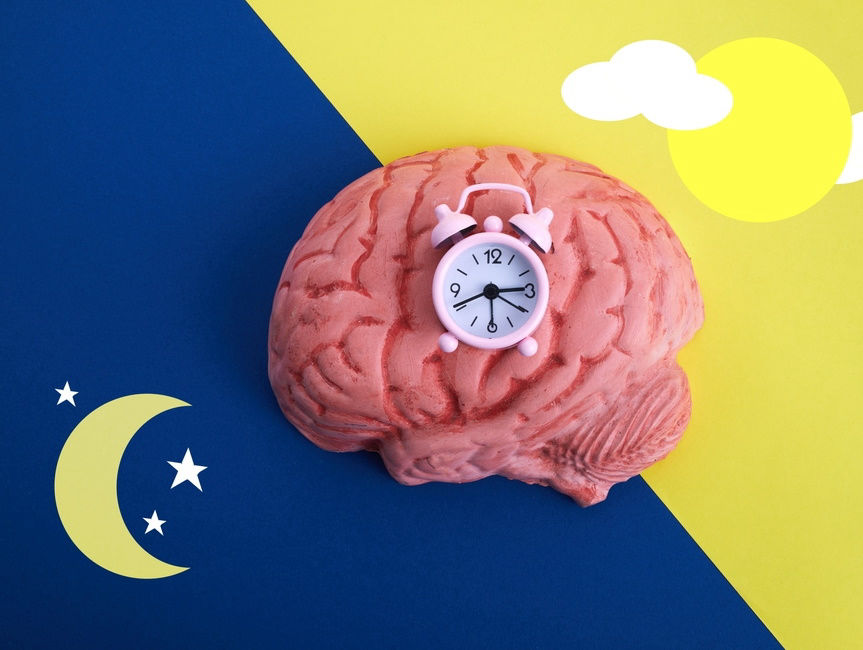
Sleep is, in fact, linked to your biological clock: the “clock” in your brain that tells you when to wake up or when to fall asleep. This clock varies from person to person. For example, there are typical night owls and typical early risers. Morning people wake up early and go to bed early, whilst for evening people it’s the other way round.
The biological clock is not a made-up concept. It has been shown that a specific group of cells in the brain acts as this biological clock. When it gets dark, these cells produce the hormone melatonin, which helps you fall asleep more quickly. It is also important to realise that this clock is heavily dependent on the light–dark cycle of day and night. And one final point about the “biological clock”. This is, of course, the well-known clock linked to our day–night rhythm. We mustn’t confuse this clock with the one that is also important for longevity: the clock that indicates how your body is faring.

Hunger…
An important concept: sleep deprivation
If you don’t eat for a while, you get hungry: you want to eat. Hunger is therefore an effect associated with eating. If you don’t sleep for a long time, you get sleep-deprived: you want to sleep. By using the word “hunger”, the comparison with eating and hunger is immediately clear.
Another term for sleep hunger is: sleep pressure.
Unfortunately, the comparison isn’t entirely accurate, because if you’re hungry and want to eat, you usually have no trouble getting something to eat – at least if there’s food available.
Unfortunately, this does not apply to sleepiness. Despite feeling as though you want to sleep, you may well find that you are unable to fall asleep.
Additional factors
Furthermore, additional factors such as a chronic illness or psychological factors (e.g. stress) will have an influence. In any case, this means that sleep problems cannot always be clearly linked to specific causes. Chronic insomnia can be long-lasting. In a review article by Prof. van Someren (see homepage), the following statement is made: half of older people currently experiencing insomnia will still be suffering from this problem a year later!
In that same article, he notes that research into insomnia has mainly been the focus of the pharmaceutical industry, whilst any expert would say that the use of medication is not, in fact, a real solution, as it does not address the cause.
It is known that the effect of medication is very limited and unfortunately there can be many nasty side effects such as worsening concentration. For example, these medicines can even be the cause of traffic accidents. Moreover, our memory can function less well as a result of these medicines.

Hunger…
An overview: the factors that affect sleep
It concerns:
1. Medical conditions: as we get older, we are faced more with chronic medical conditions, such as arthritis, Parkinson's disease and sleep apnoea. These conditions generally disrupt sleep. More generally, pain (for example as a result of a rheumatic condition) disrupts our sleep.
2. Medication: Some medicines, such as tranquillisers and antidepressants, will disrupt sleep. One of the biggest problems is that many people assume sleep problems can only be solved with medication. That can lead to a medicine addiction, and then the remedy is certainly worse than the disease. Experts will always advise against the use of sleeping pills!
3. Lifestyle factorspoor sleep habits, such as going to bed at irregular times and a lack of physical exercise, will contribute to sleep problems. We know that old age is associated with less physical activity and that too is a cause of disturbed sleep.
4. Psychological factorsStress, anxiety and depression will generally all affect sleep quality. We also encounter these factors in older people, often in combination with feeling unwell as a result of loneliness. The course offerings of the Vitality package include several courses that focus on these psychological factors.

Structure of the course
In the following section, we will first explore the question of what sleep is in more depth.
Next, we discuss the different phases we go through while sleeping. In fact, you are not aware of those phases… you are asleep, after all. You can usually indicate whether you have slept well or poorly and whether, for example, you have slept deeply. You can usually also remember whether you woke up a number of times during the night.
Knowledge regarding these various phases is important in order to better understand what can happen during sleep and the importance of these sleep phases with regard to “sleeping well”.
In the subsequent part, we focus on sleep problems. Naturally, in the concluding section, we will then delve deeper into perhaps the most important question: what can you do about sleep problems?
Duration of this course
The course includes several YouTube videos alongside articles that you can read as supplementary material. Depending on how deep you want to go, the course will take from 1 to several hours.

Questions or assignments
In this course you will sometimes come across questions or assignments. Above all, do not be put off by them! You are under no obligation whatsoever, after all. They are purely intended as extra depth for anyone who fancies it. So please feel free to just skip them.