Science today for a healthier tomorrow
We kick off with a record-holder: the Greenland shark. This animal can reach an age that defies human imagination.
You can turn on subtitles by using the cog icon in the bottom right.
The Greenland shark grows extremely slowly: about one centimetre a year. Eventually, a specimen can grow to more than five metres in length. It is a bizarre thought: an animal that is 400 years old! That would mean that if this shark had died in 2020, it was born around 1620 — right in the middle of the Eighty Years' War against Spain. This animal only reached sexual maturity around 1750, even before the French Revolution had broken out. We can rightfully say that this fish has an exceptionally long youth.
Researchers suspect that the shark reaches this advanced age by living deep in the ice-cold ocean. In that cold, all metabolic processes take place extremely slowly. The heart rate is therefore extremely low: just 12 beats per minute.
But how do we actually know this? How do you determine the age of an animal that has been swimming around for centuries? The secret is hidden in the shark's eyes.
The following video explains how scientists use carbon dating to unravel this mystery.
The video explains how scientists determine age using carbon dating. Every living creature contains carbon, which occurs in different variants (isotopes).
The most common is the stable variant: carbon-12. In addition, cosmic radiation in the atmosphere produces an unstable, radioactive variant: carbon-14. Living organisms continuously absorb both forms from their environment.
As soon as an animal or plant dies, the absorption of carbon stops. From that moment on, the unstable carbon-14 slowly begins to decay. This happens at a fixed rate, the so-called ‘half-life’, of an average of 5,730 years. After this period, exactly half of the original amount of carbon-14 has gone.
By contrast, the amount of stable carbon-12 always remains the same. By measuring the current ratio between these two variants, scientists can calculate very precisely how long ago the organism died.
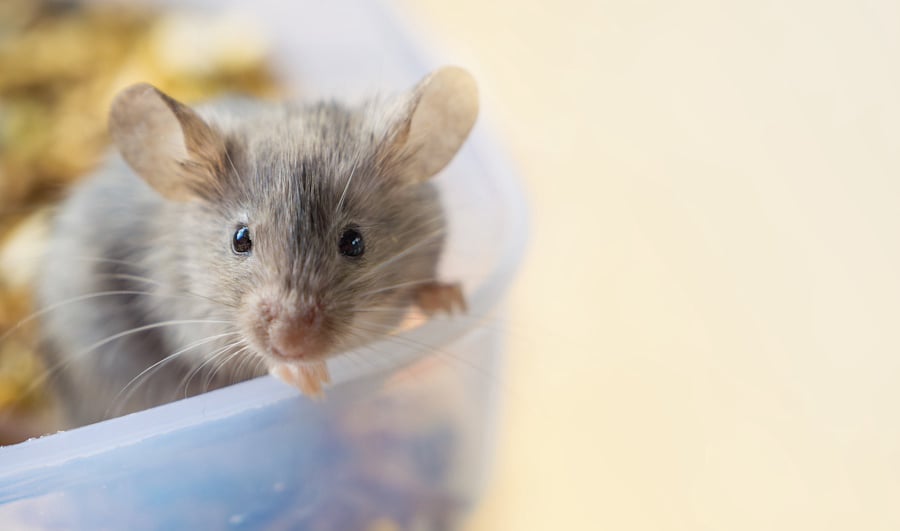
The next animal we are covering is the mouse. A common house mouse usually lives for no longer than a year in the wild, but biologically can reach about three years of age. In the wild, the wood mouse even achieves an average of just three months, whilst its maximum lifespan is around eighteen months.
It makes a huge difference whether we look at mice in the wild or mice in captivity. In a safe environment, without predators and with plenty of food, a mouse can sometimes live to be four to five years old. The ‘secret’ of their short life in nature is therefore simple: they almost always fall prey to other animals before they get the chance to grow old.
The following video explores the life cycle of the mouse and the dangers they face on a daily basis.
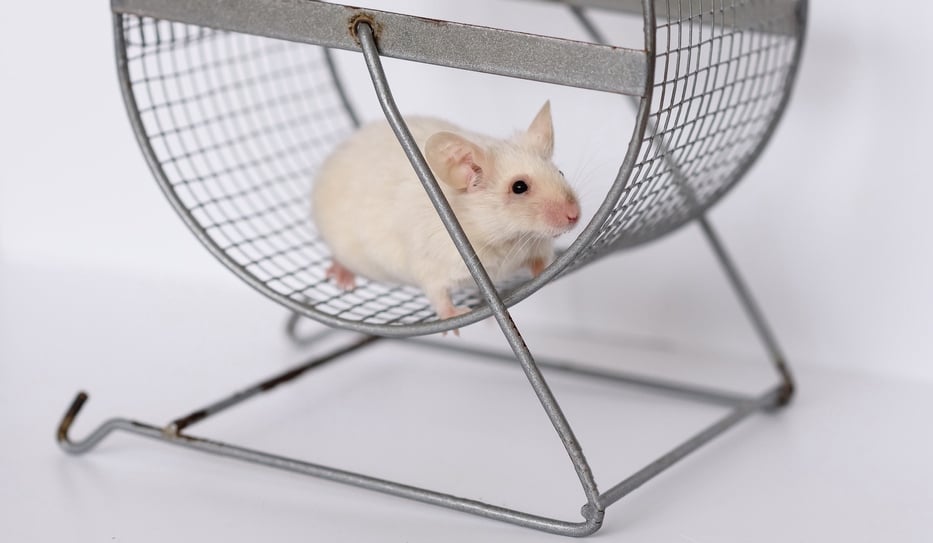
In laboratories where the life expectancy of animals is studied, mice are favourite test animals: they resemble humans in a number of ways, but given their much shorter lifespan, the influence of all kinds of factors can be studied quickly. This research is of great importance for understanding ageing processes.
The heart rate of mice is about ten times that of humans. They reach a heart rate of 600 beats per minute. If the total number of heartbeats were decisive for life expectancy, humans would live to be about 4 × 10 = 40 years old.
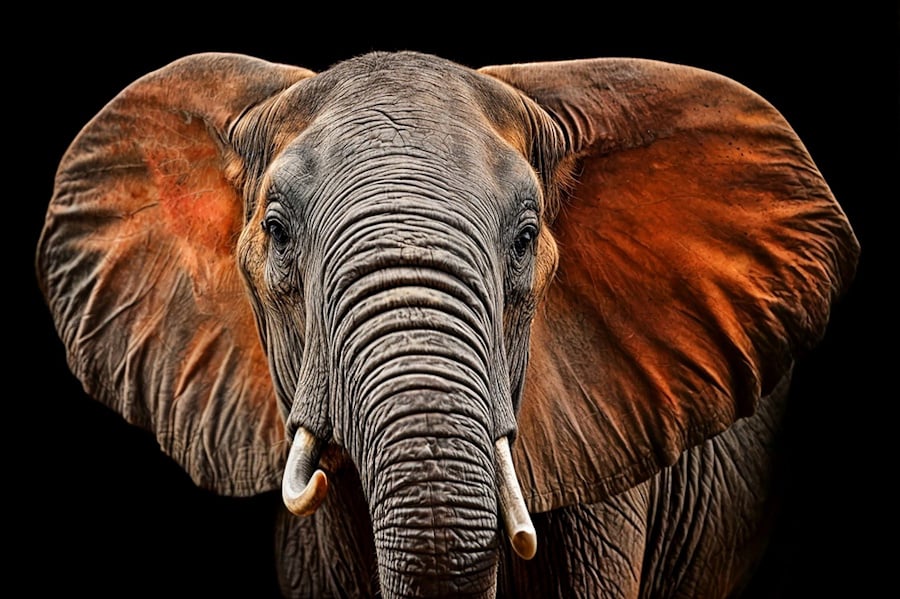
Here we see the impressive African elephant. In the wild, this animal typically reaches an age of between 60 and 70 years; many sources put the average at 65 years. Although there are outliers that live even longer, the life expectancy for most specimens is around this age.
The heart rate of an African elephant is, like that of most large mammals, relatively low. At rest, the heart beats on average only 15 to 30 times per minute.
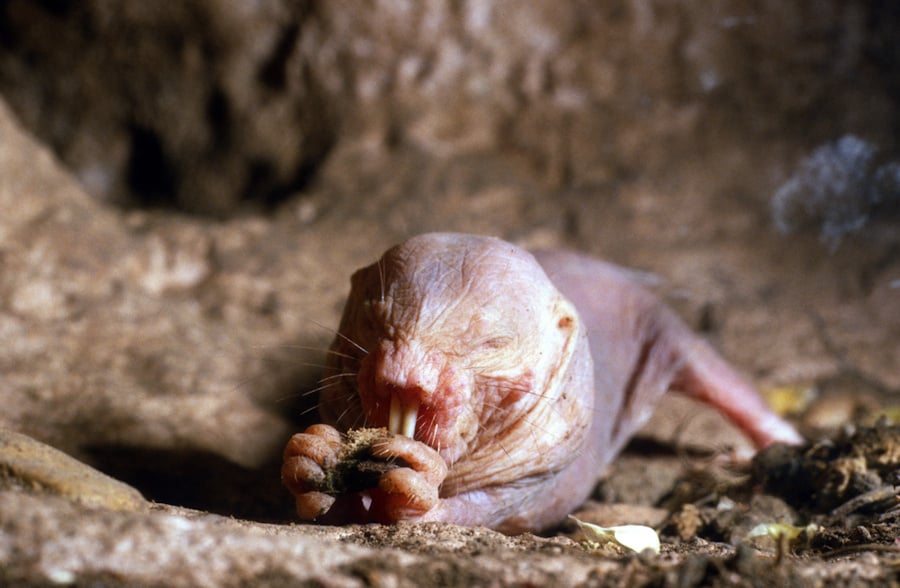
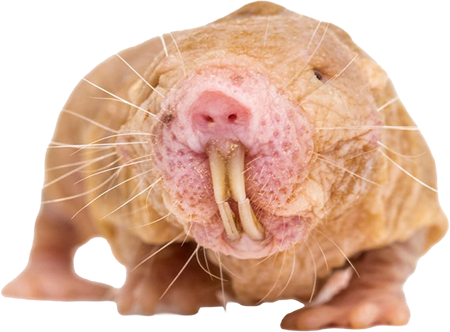
There is one animal that definitely deserves separate attention: the naked mole rat. This extraordinary creature lives deep underground and looks almost extraterrestrial. It has tiny little eyes with which it can barely see and skin that is completely hairless — hence its name.
Although it is a rodent, the naked mole-rat possesses two baffling characteristics: it lives many times longer than its peers and cancer is virtually non-existent in this species. While an ordinary mouse lives for an average of two to three years and a rat at most six years, the naked mole-rat easily reaches an age of more than thirty years!
What is going on here? Why does this little animal show hardly any signs of ageing, whilst its close relatives die after just a few years? What is the secret behind this exceptional lifespan?
On 10 October 2025, researchers published the long-awaited secret: the naked mole-rat possesses a specific enzyme (a protein) that can repair damaged genetic material extremely effectively. The biggest surprise? Other mammals, including mice and humans, also possess this very same enzyme.
According to the scientists, this discovery opens the door to revolutionary possibilities: by genetically manipulating other animals, they could adopt the regenerative power of the naked mole rat. This makes the enzyme a potential ‘life-extender’ for the future. It is a striking example of modern medical insight in which old age is no longer seen as an inevitable fate, but as a disease — a disease characterised by the accumulation of damage to our genetic material.
Answer: The Eighty Years' War with Spain.
Answer: Because the organism stops taking in food and air after death.
Answer: Between 15 and 30 beats per minute.
Answer: Because they do not fall prey to predators there.
Answer: cancer.
An overview: animal – life expectancy
Greenland shark
270 – 400+
The oldest vertebrate in the world. They grow very slowly and only reach sexual maturity around their 150th year.
Aldabra giant tortoise
100 – 200+
Famous land record holders.
Right whale
150 – 200
One of the longest-living mammals.
Red sea urchin
100 – 200
They hardly seem to age and often die from predators or disease, not from old age.
Elephant
60 – 70
(Adapted from 80, which is very exceptional. 60-70 is more realistic in the wild).
Orang-utan
50 – 60
One of our close relatives of a respectable age.
Parrot (e.g. cockatoo/African grey)
40 – 60+
Can sometimes reach 80 or 100 years of age in captivity.
Chimpanzee
30 – 50
In the wild often shorter, in captivity sometimes older.
naked mole rat
30
Exceptionally old for a rodent (compare with a mouse). They are also resistant to cancer.
Lion
15 – 25
Lionesses in the wild often live longer (approx. 18) than males (approx. 12) due to fights among themselves.
Ree
12 – 15
A typical example of a medium-sized Dutch mammal.
Dog
10 – 13
Strongly dependent on the breed (small dogs often live longer than large breeds).
Chameleon
(approx. 4-5 months)
Has the shortest lifecycle of all four-legged land animals. They live almost their entire lives as an egg underground.
House mouse
1 – 2
A very short lifespan, compensated for by rapid reproduction.
Mayfly
A few hours to days
(As an adult insect). However, the larvae often live underwater for 1 to 3 years.