Conclusions
What conclusions can we draw now?
Striking differences!
When we compare the life expectancy of various animals, we encounter extremes. We have seen that species that seem very similar at first glance can in practice have a completely different lifespan.
The Rodent Paradox
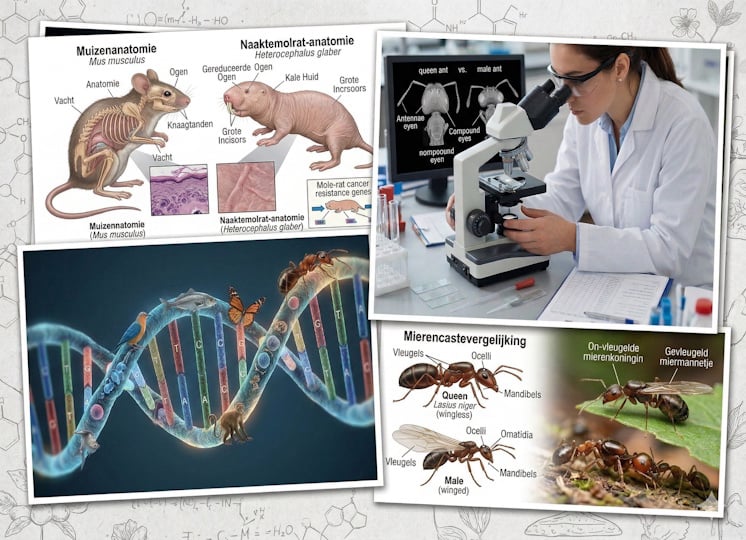
One of the most striking examples is the contrast between the mouse and the naked mole-rat. Although both are small rodents with a similar build, a mouse lives on average for only two to three years. The naked mole-rat, on the other hand, defies time and can live for more than thirty years, while also appearing virtually immune to age-related diseases such as cancer.
Even inexplicably large differences
Among ants, a male sometimes lives for only a few weeks, whereas a queen can reign for as long as thirty years.
What proves that?
This extreme variation proves that lifespan and ageing are not an immutable fate. It is not determined solely by, for example, how large an animal is, or by lifestyle and safety. No, there are clearly other factors at play and if we better understand those differences, it could also shed light on our own ageing processes.

Dr David Sinclair is one of the most high-profile figures in the field of actual rejuvenation. He is a professor at Harvard Medical School
What does science say?
The large differences in life expectancy between animals are usually explained in science by a combination of biological and evolutionary factors.
An important factor is metabolism. Animals with a very fast metabolism – such as mice – produce more harmful by-products in their cells, as a result of which ageing can occur more quickly.
In addition, DNA protection and DNA repair play a role. Some species, such as the naked mole-rat, appear to have exceptionally effective mechanisms for repairing damage to cells and preventing cancer. Don’t be put off by the term ‘DNA’ – we’ll be looking at it in more detail later.
Evolutionary strategies are also important. In social insects such as ants or bees, the queen is essential for the reproduction of the colony. As a result, evolution has favoured mechanisms that allow her to live longer, whereas males are often only needed briefly for reproduction.
Together, these factors show that lifespan is not a matter of chance, but the result of biological adaptations and evolutionary strategies. Dr David Sinclair even goes so far as to suggest that ageing should be viewed as a kind of disease.
And how do you fit humans into this picture?
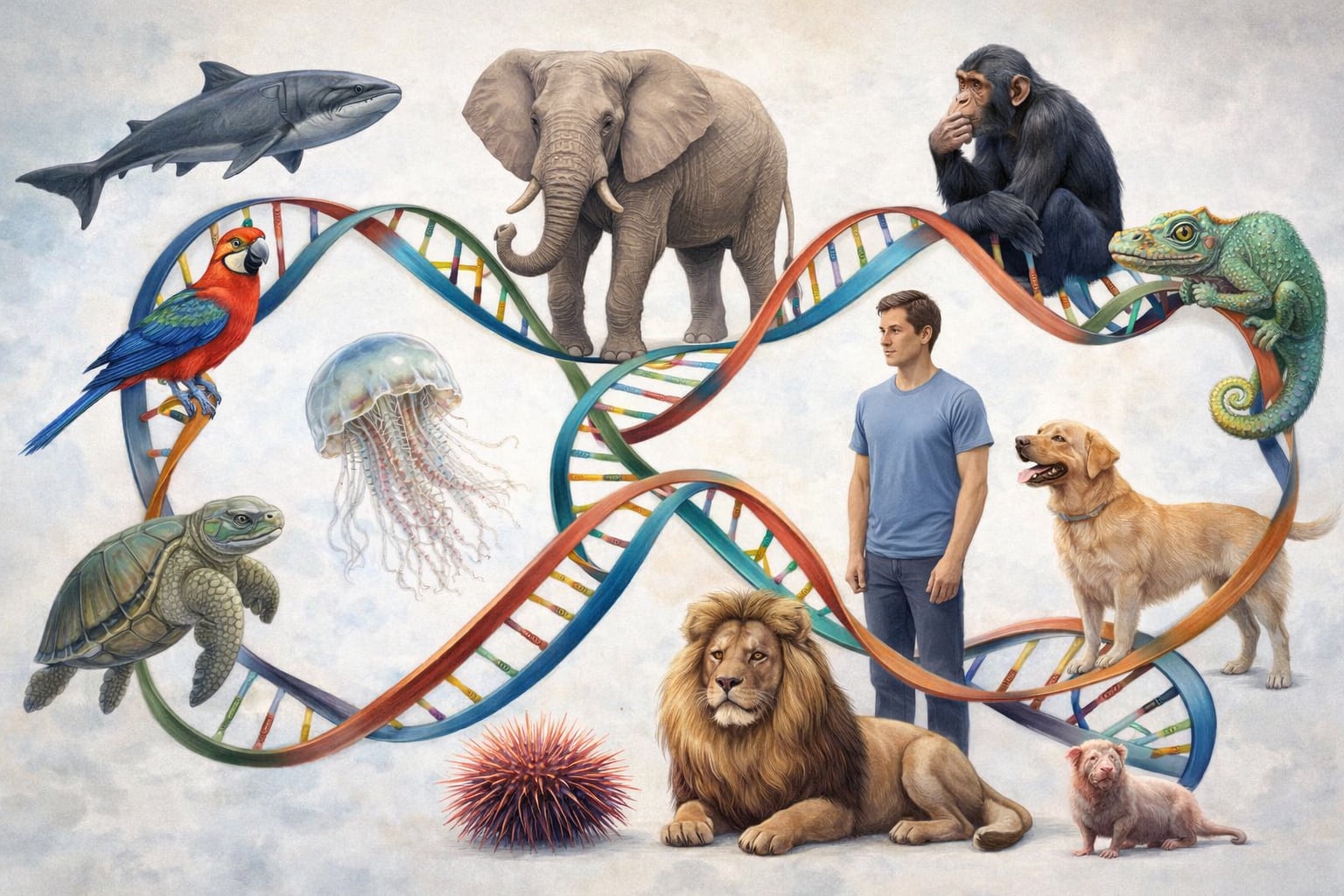
When we place humans in this overview, it is striking that humans have a relatively long lifespan for their body size. Many mammals of a comparable size – for example, sheep or deer – have a life expectancy of about 10 to 20 years, whereas humans live much longer on average.
Various explanations are given for this. Humans possess relatively good mechanisms for cell recovery and DNA repair, and furthermore have a slow development: a long childhood, a long period of learning and relatively late reproduction.
Additionally, the social organisation plays a role. People live in groups in which older individuals pass on knowledge and experience. Some researchers see in this an evolutionary advantage of a longer lifespan.
Finally, culture and technology also have an enormous influence on humans: medicine, nutrition, hygiene, and social care have greatly increased life expectancy over the past centuries.
The role of DNA and DNA repair in lifespan
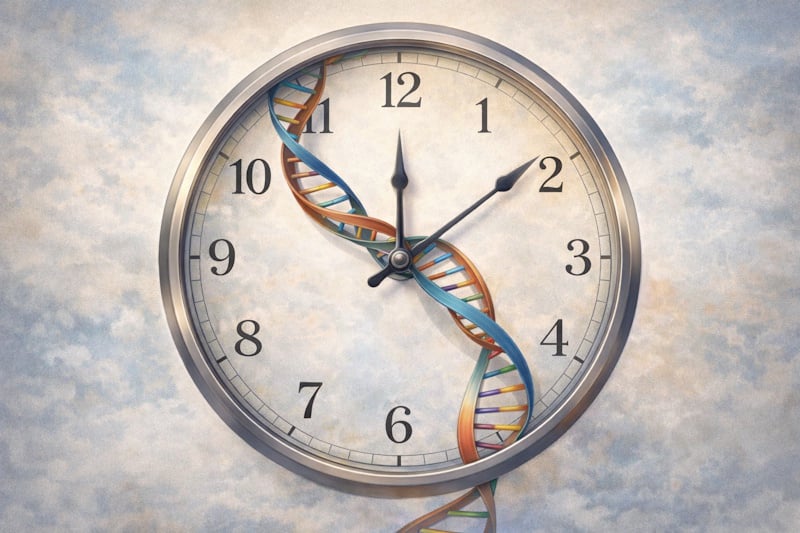
Many researchers think that DNA, and DNA repair in particular, forms an important key to differences in lifespan between species. In every cell, damage to the DNA or to the mechanism that controls the DNA occurs constantly, for example through metabolic processes, radiation or chemical reactions. We note here that later in this series we will pay a lot of attention to the DNA and the mechanism that controls the DNA. So do not be put off by the term DNA now.
Therefore, in modern ageing research, a great deal of attention is paid to processes that protect, repair or reprogram DNA. They are seen as one of the most important biological factors behind lifespan.

You have now been introduced to various natural “survival tactics”. In this assignment, you will analyse the blueprint of three completely different animals yourself.
What do you need?
1. A sheet of paper and a pen (or a digital document).
2. The knowledge you have just acquired.
The Assignment:
Imagine you are a biological designer. Create a table with three columns for the following three animals: the House Mouse, the Naked Mole-rat and the Human.
Answer the following three questions for each animal in your table:
1. The Strategy:
Is this animal built for speed (many offspring, short life) or for durability (few offspring, long life)?
2. The Repair Service:
How hard does the “maintenance crew” in this animal's cells need to work? (Moderate, Hard, or Extremely hard?)
3. The Bonus card:
What extra trump card does this animal have? (For example: social care, a safe environment underground, or modern medicine).
The Reflection:
Now look at your table. Draw a circle around the factors that you would also like to improve or strengthen for yourself.
Why are we doing this?
By filling in this table, you can see at a glance that lifespan is not a coincidence, but the sum total of choices in nature's “cookbook”. You will discover that we as humans have already come a long way, but that we can still learn a lot from the naked mole rat about the “repair service”.