Science today for a healthier tomorrow
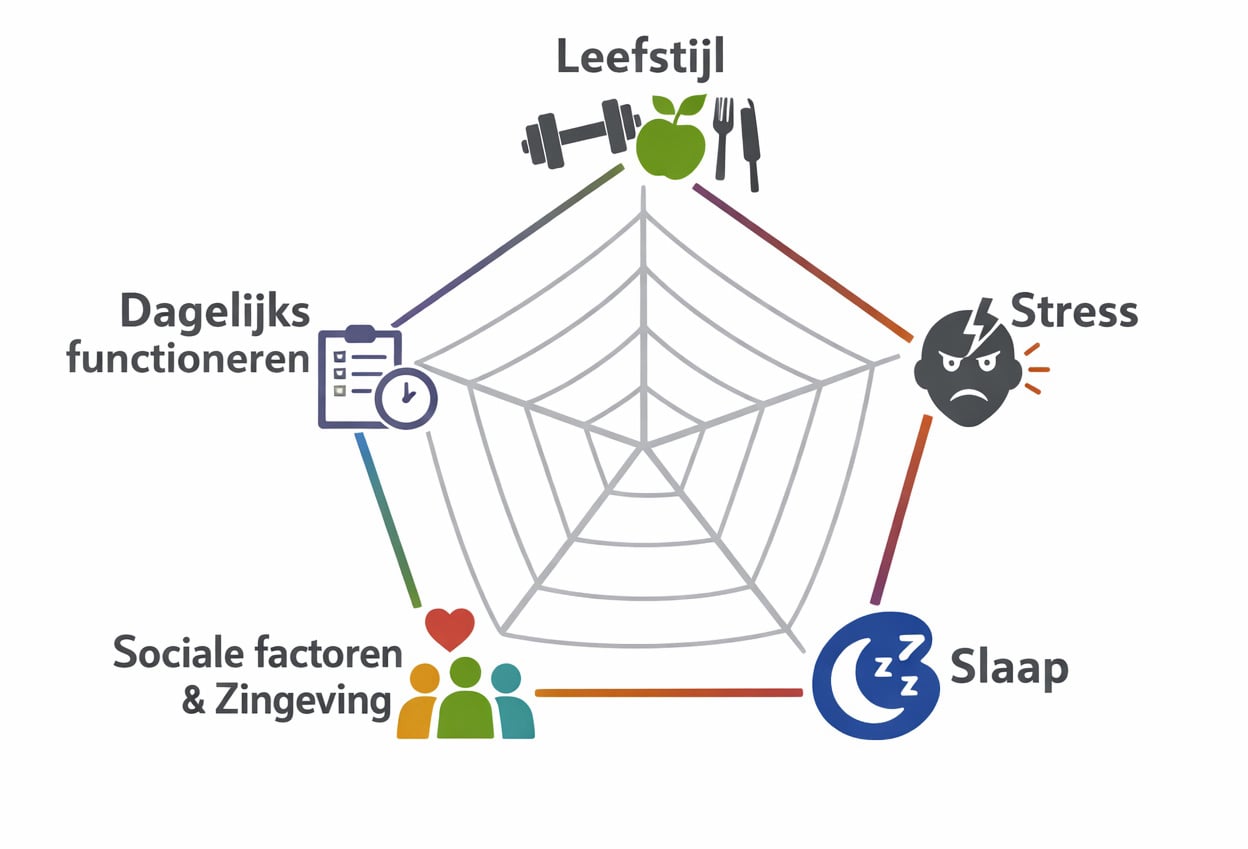
Before we delve deeper into exercise and endurance in particular, we will first look at an overview of important lifestyle factors. We do this using a spider's web, with each vertex representing an important perspective. We use this to help you make conscious choices.
Lifestyle
Nutrition and exercise form the basis in virtually all books on this subject.
2. Stress
Prolonged stress disrupts your balance and can accelerate the ageing process.
3. Sleep
Sleep ensures recovery. Without good sleep, other measures work less well.
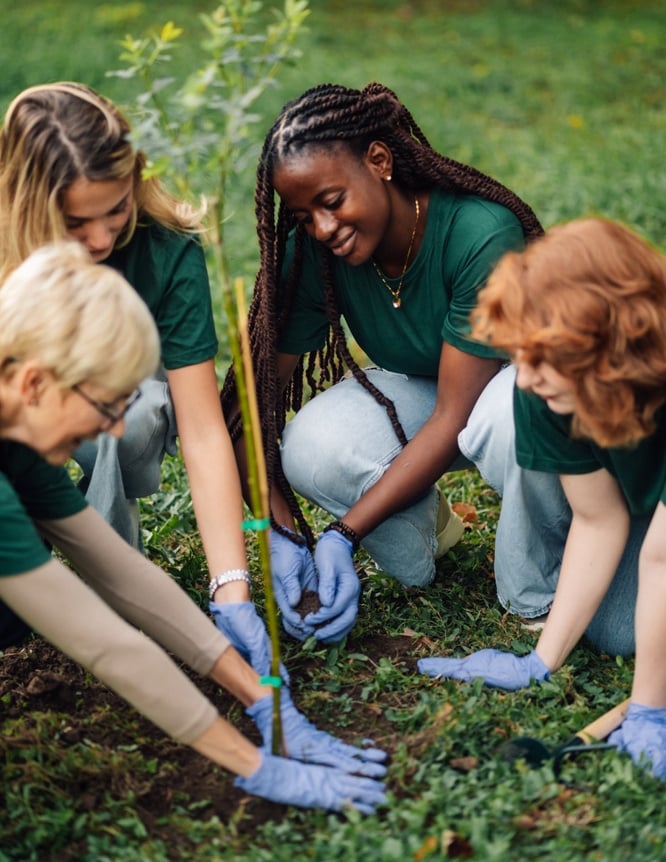
4. Social factors and sense of purpose
Contact with others and a sense of purpose provide peace and direction, partly because stress decreases.
5. Daily functioning
Structure and regularity help to maintain healthy behaviour and make change possible.
We will now look at these five points one by one.
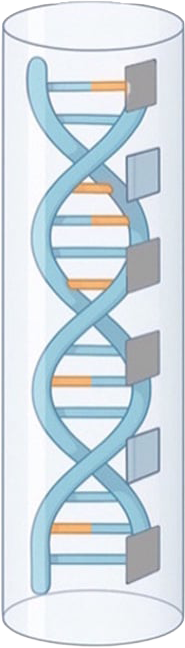
When there are so many angles, it is helpful that epigenetics provides direction. We start with the factors whose direct effect has been most clearly demonstrated:
1. Lifestyle (the strongest evidence base)
Especially physical activity plays a major role here. This is also what has been researched the most. The effects are measurable via the biological clock and changes are sometimes visible within days to weeks.
2. Stress (often underestimated)
This is mainly about chronic stress. It can accelerate biological ageing.
Short-term stress is not a problem, but long-term stress has a major impact.
In practice, reducing stress can be almost as important as nutrition and exercise.
3. Sleep (often forgotten, but essential)
Sleep regulates our recovery processes. Measurements show just how important good sleep is for the body.
4. Social factors and sense of purpose
This usually concerns factors that indirect be of significance and they are also less directly measurable. People with social support live healthier lives. The point is certainly important, but comes above all indirect expressed and stress.
5. Daily functioning / structure (supportive)
Helps to maintain behaviour. Here, too, we can say that there is no epigenetic evidence to support this.
We want to avoid looking only at epigenetics. Moreover, measuring epigenetic data is often costly. In practice, therefore, we look at multiple types of data.
This involves, for example, medical values such as blood glucose, cholesterol and inflammatory markers, as well as blood pressure, weight and body composition. By testing blood and urine, a comprehensive picture can be obtained of how the body is functioning.
This data shows the body's actual condition and whether there are any risks or early abnormalities. In combination with epigenetic research, this creates a complete picture. This allows you to better determine where you stand and where adjustments are needed, both preventively and in the case of existing health problems.
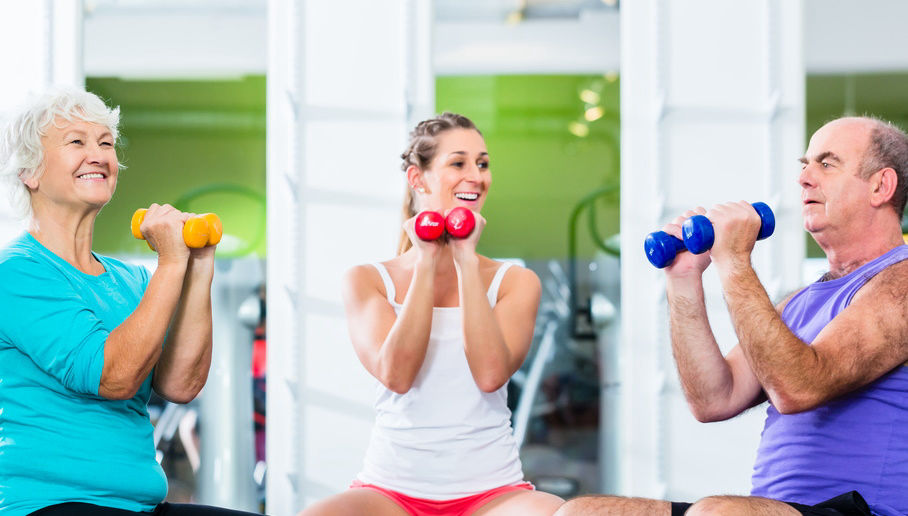
Exercise keeps us fit and is a powerful remedy against, for example, cardiovascular diseases. The concept of physical condition, and endurance in particular, plays an important role in this.
Furthermore, physical fitness consists of several components:
flexibility
muscle strength
* coordination
Always keep in mind any limitations that may arise with ageing. Your age plays a role in this as well.
.
When you are young, fitness is mainly determined by factors such as:
stamina
2. power
the extent to which you have a healthy weight
As you get older, the emphasis shifts. It becomes less about peak performance and more about continuing to function safely and independently, for example through fall prevention.
In addition, other factors become more important, such as:
flexibility
* coordination
It is becoming increasingly clear that certain exercises are important for your brain function. These are mainly movements where you use both the left and right sides of your body and where you have to keep thinking.
In the video, Rinus Pecht explains how this works and why these exercises are so effective.
We are providing a couple of videos. The first focuses on flexibility in general. But it will be clear that the video is mainly aimed at young people.
These exercises are specifically aimed at seniors.
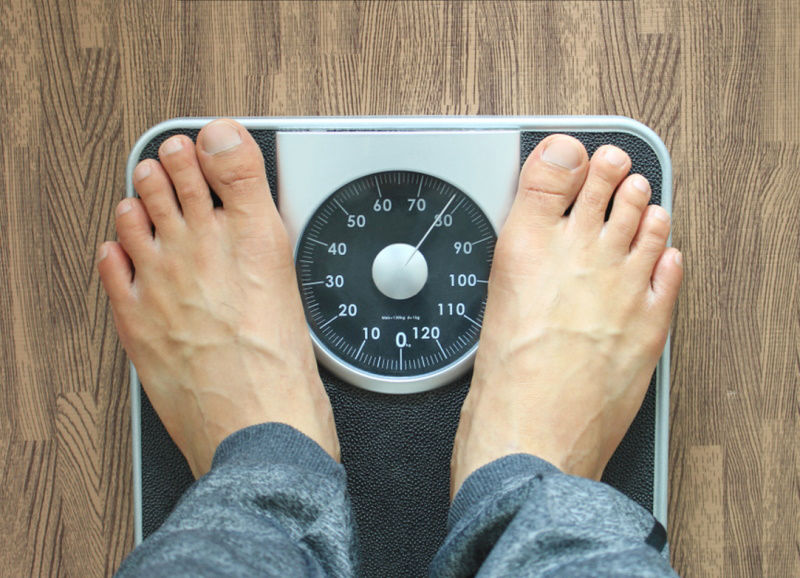
The Netherlands Nutrition Centre has developed a test to determine whether someone is overweight. You might have heard of the Body Mass Index (BMI).
You calculate this value by dividing your weight in kilograms by your height in metres squared (height × height). The Voedingscentrum test also takes age into account.
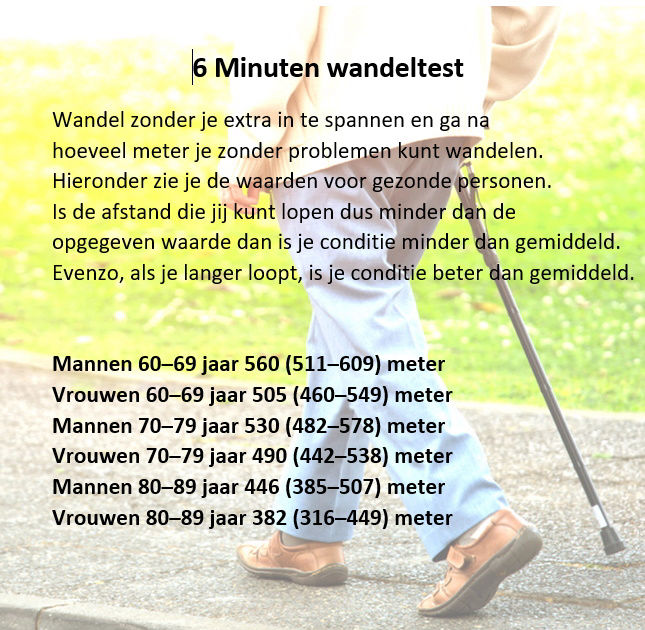
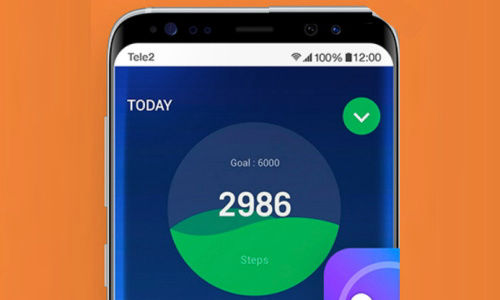
Various tests have been developed for endurance. Unfortunately, most tests are not suitable for older adults. An exception is the so-called 6-minute walk test. This test does not require much preparation. In the video, a simple course has been laid out. You can also go walking outside and use your smartphone, for example, to check how many metres you have walked. Most fitness apps can do this. Ask someone who is familiar with smartphones to download and demonstrate such an app.
Just in case you want to do the walking test. You can see the details in the image. And the video shows the test. In case you find this too complicated, we have a simple test. Walk up a flight of stairs twice in a row without stopping. If you reach the top puffing and panting, you are experiencing problems with your stamina.
Then there are more extensive tests. You can find more information via the link: tests
In case you want to do the walking test. In the image above you can see the data, and the video shows the test
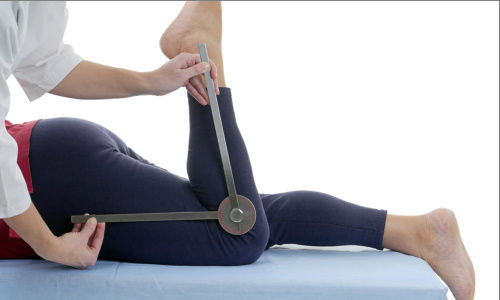
Getting older also means becoming less flexible, less supple. Back when you were a child, you could still pull your foot up to your head... older people certainly can't manage that anymore. That said, by doing specific exercises, you can still remain reasonably flexible well into old age.
Would you like more information? Use the link: range of movement
Below you can find a few more options.
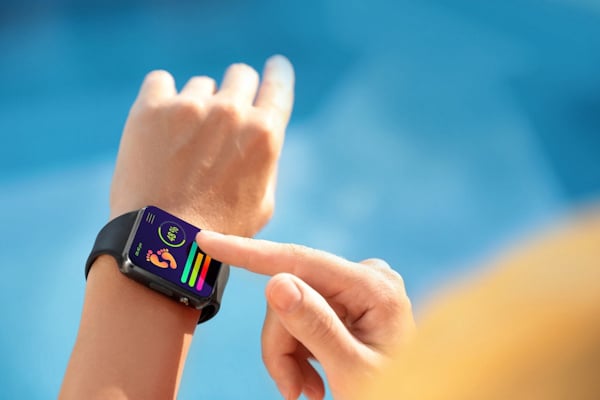
Fitness and health are important topics that businesses are also strongly committed to. There are many apps and fitness trackers. Modern smartwatches are packed with features to monitor your health and fitness.
The true fitness enthusiast usually already knows how to handle this well. For them, extra explanation is often unnecessary. Therefore, we will not go into this any further.
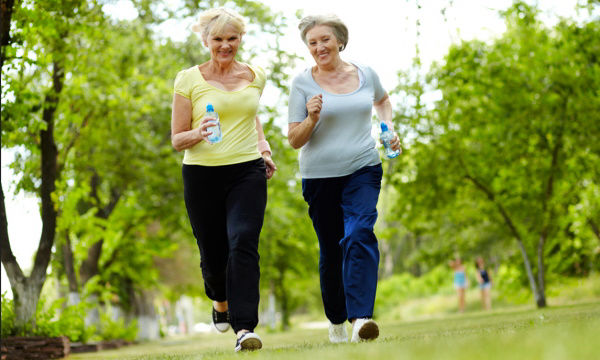
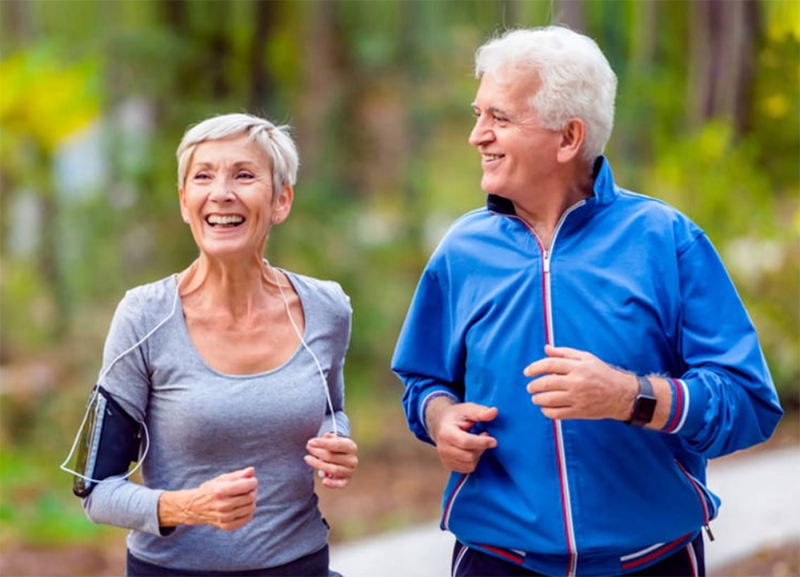
Walking remains the most obvious way to stay physically active. If necessary, ask a walking buddy to join you for that daily walk. For non-seniors, the familiar recommendation applies: be active for at least 30 minutes a day. See what you can still manage comfortably!
Many seniors use a rollator at an advanced age. No one is ashamed anymore of using such a rollator. It provides more stability and the weight that rests on the rollator no longer rests on your legs and joints. That can be important. Cycling also supports the body and therefore joints are subjected to less strain.
We all know that it is important to have good stamina. For some, not a day goes by without them working on their stamina, while others find the walk from the couch to the fridge quite a challenge.
Running, it seems so easy. You put on your shoes and you start. But if you are not used to it, you notice that running requires more preparation. The right shoes, the right clothing. That attention can make you even more eager to start your jog.
Walking, running, walking briskly, jogging, it is a very popular sport that is practiced by more and more people. For this reason, in this module we offer background information so that you have more knowledge of the sport you are going to practice.
A brilliant series from broadcaster MAX
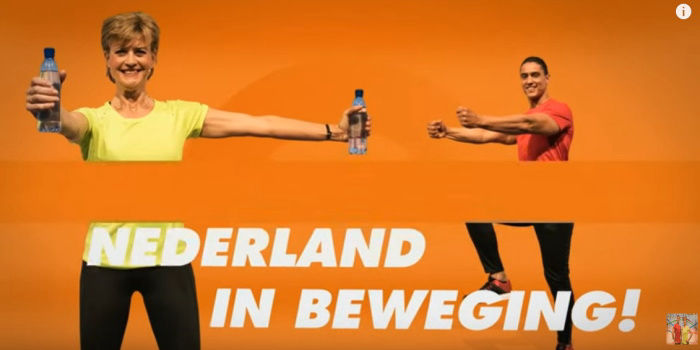
We are finishing this lesson with Olga Commandeur. Olga Commandeur is certainly a household name in the Netherlands when it comes to general exercises to stay fit. Great music and simple movements. See if you can join in and know that there are plenty of videos of her to be found.