Supplements
All those supplements to become super healthy?
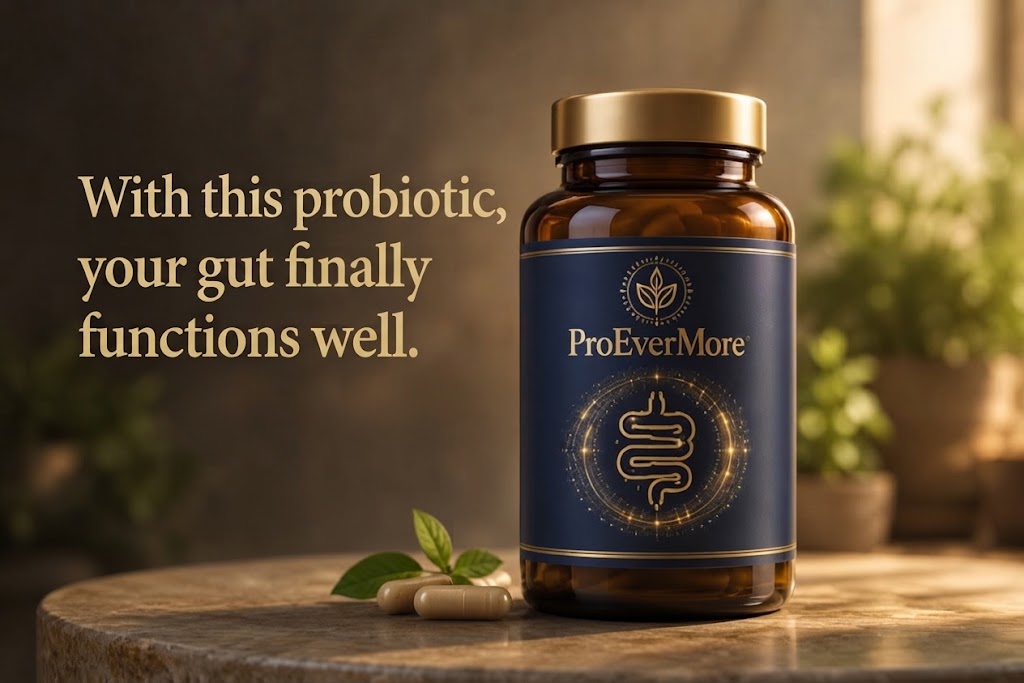
Remarkable!
Supplements have become enormously popular in recent years.
More and more people take daily supplements such as:
• vitamins,
• minerals,
• fish oil,
• magnesium,
• probiotics
• or special longevity supplements.
Why has that interest grown so strongly?
One key reason is that people increasingly want to take control of their own health. In the past, people often thought: “You’re getting older and there’s not much you can do about it.” These days, everyone is an “online expert” or, even more so, “under the spell of influencers”.
And some concepts are fancy while almost nobody knows the meaning.
An example: probiotics
Take a term like “probiotics”, perhaps the ultimate textbook example of how a legitimate scientific concept has been hijacked, diluted and commercialised by marketing. If you dissect the term, you see exacty what we are talking about: a huge gap between the fascinating world of science and the misleading claims coming from marketing.
The problem with the term “probiotics” can be captured in three sharp paradoxes: (click on 1, 2 and 3)
1. The linguistic paradox: The definition is itself a claim
The official definition of the World Health Organization (WHO) is: “Live micro-organisms that, when administered in adequate amounts, confer a health benefit on the host.”
So the claims are already baked into the word itself. If a manufacturer puts “probiotics” on a jar, they are essentially already saying: this is good for you. It is precisely for this reason that the European Commission (recently endorsed by the European Ombudsman) has largely banned the term “probiotics” on packaging as a health claim. The EFSA (European Food Safety Authority) simply states that for the general, healthy population there is insufficient hard evidence that these bacteria do “something good” by definition.
2. The complexity paradox: "The" probiotic doesn't exist
When a doctor says, “You need to take antibiotics”, everyone immediately asks: which ones? Because penicillin does something quite different from amoxicillin. When it comes to probiotics, the marketing lums all of them together. They claim: “Good for the gut flora!”
However, the action of bacteria is extremely specific. A term like “probiotics” obliterates all those crucial nuances. It is like buying a box of pills that simply says “medicine”.
3. The commercial paradox: The struggle for survival
To be able to do anything at all, those billions of bacteria have to: Stay alive in the jar on the shelf at the chemist's.
Surviving the extreme acids in your stomach. Withstanding the bile acids in the duodenum. And then successfully competing with the hundreds of trillions of bacteria that already live in your gut.
Many cheap probiotic drinks or tablets contain strains of bacteria that do not even survive the passage through the stomach, or contain only a fraction of the live cells by the time you consume them. Yet the word “probiotics” is still proudly displayed on the packaging.
Here is an example of information provided by an academic institution
Vitamin D
Children up to and including the age of 3, people with dark skin, women aged 50 and over and men aged 70 and over [01:04].
2. Folic acid & Vitamin D
For pregnant women.
3. Vitamin B12
For people who eat few or no animal products (such as vegans and vegetarians) [01:24]. In the event of illness: for people who, due to illness or other reasons, are unable to eat enough [01:29].
4. Myths about resistance:
There is no scientific evidence to suggest that extra vitamin C (or other vitamins) helps prevent colds or flu, or that it speeds up recovery [01:41]. You can simply support a healthy immune system by eating healthily [01:48].
5. Risks of high doses
For supplements, the saying ‘if it doesn't help, it won't hurt’ does not apply. Too high dosages can be harmful. For example, an excess of vitamin B6 can lead to nerve damage.
6. Recommendation
If you do want to take supplements, choose a product that contains no more than 100% of the Recommended Daily Intake (RDI) [02:29]. Avoid supplements that are significantly higher than this (sometimes as much as 1000%) [02:41].
A preference is always given to a normal diet, as products such as fruit and vegetables contain not only vitamins but also other essential nutrients, such as fibre [02:54].
What stands out?
The video we’ve just shown comes from an expert and immediately highlights a typical feature of much of the information provided about supplements.
The main problem is that many so-called experts also offer advice. For a layperson, it is often almost impossible to assess just how strong the scientific evidence behind certain claims really is. Moreover, complex terms are regularly used which sound impressive but are barely understandable to many people.
As a result, supplements are an area where quacks and companies with little regard for ethics can easily exert influence. Marketing plays a major role in this. Those who are unable to assess the information properly are more likely to fall for attractive promises.

1. The “Nobody gets it” effect
The biochemistry behind vitamins, minerals, biological clocks and cellular health is extremely complex. Because the average layperson cannot evaluate the evidentiary value of a clinical study, a gigantic knowledge gap arises.
Marketing agencies step into precisely that gap. Where official information (such as the video from Amsterdam UMC) is often very conservative, cautious and defensive (“you don't need anything if you eat healthily”), the marketing of supplement companies is often offensive, hopeful and seductive. They don't sell molecules, they sell a promise: energy, youth, focus, or a longer life.

2. The vacuum between “not ill” and “optimising performance”
Traditional medical education is almost always aimed at the prevention of deficiency diseases (such as osteoporosis). A completely different standard applies to this than to the modern desire for optimal health, prevention and longevity.
Because established science often (understandably) only gives firm advice after decades of large-scale research, a grey area emerges. Two groups operate within that grey area:
The bona fide pioneers: Scientists and biohackers who look at the cutting edge of science (such as epigenetics and cellular ageing) and experiment based on early, promising data.
The quacks and opportunists: Parties that abuse trendy terms (such as “anti-ageing” or “detox”) to sell inferior, grossly overpriced or even dangerous products without any ethical boundaries.
This is a world that is perfect for influencers

Conclusions
The supplement market is indeed an ethical minefield where marketing rules. The only weapons you have as a consumer or developer in this market are transparency, dosage and referencing sources.
If a party claims that a supplement works, they shouldn't refer to “studies show”, but show exactly which studies (clinical or pre-clinical?), at what dosage, and what the bioavailability of their specific product is. Only by setting the bar for scientific integrity extremely high can you distance yourself from marketing-driven quackery.


Duration and prior knowledge
Prior knowledge
You do not need any prior knowledge to take part. It is, however, recommended to first read through the section “DNA: the epigenome and healthspan".
How long does this part take?
You will go through this section in about an hour. Would you like to delve deeper? You will also find extra articles and videos on the site. If you dive into those, it will naturally take you longer — but it is terribly interesting!
Use our dictionary
When you encounter terms in articles or videos that you have never heard before — such as “mTOR” — it can be confusing. That is why you can make use of our glossary. In it, difficult concepts are explained in a simple way, so that you get more guidance when following information about supplements and longevity.
Questions or assignments
In this course you will sometimes come across questions or assignments. Above all, do not be put off by them! You are under no obligation whatsoever, after all. They are purely intended as extra depth for anyone who fancies it. So please feel free to just skip them.
