Science today for a healthier tomorrow
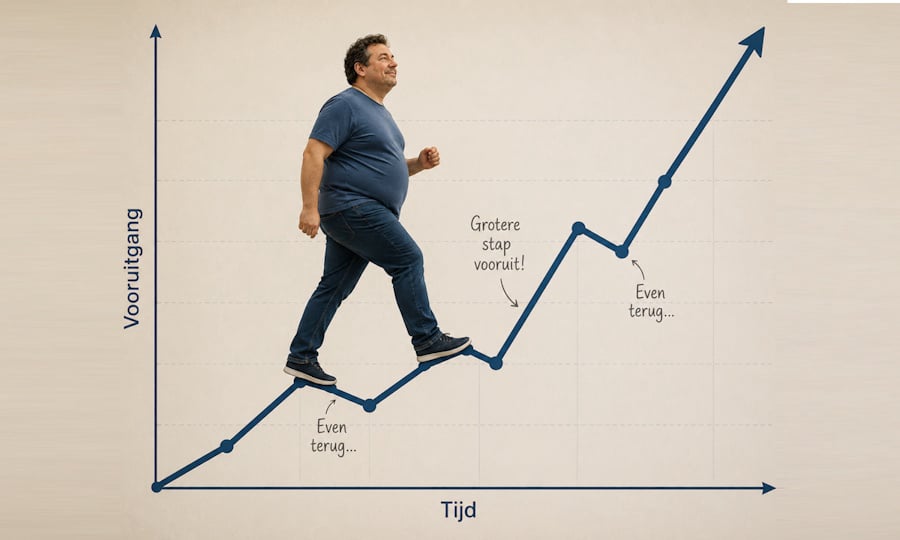
Many people think that behavioural change is a straight line: a little better every day. In reality, it often involves ups and downs. Sometimes things go well for weeks, followed by a difficult period.
That is normal. Learning new habits is like learning to ride a bike. In doing so, you sometimes fall as well. A relapse does not mean that you have failed. It only means that you have strayed slightly from the route.
Important to remember
A relapse is not a failure. It is part of the learning process.
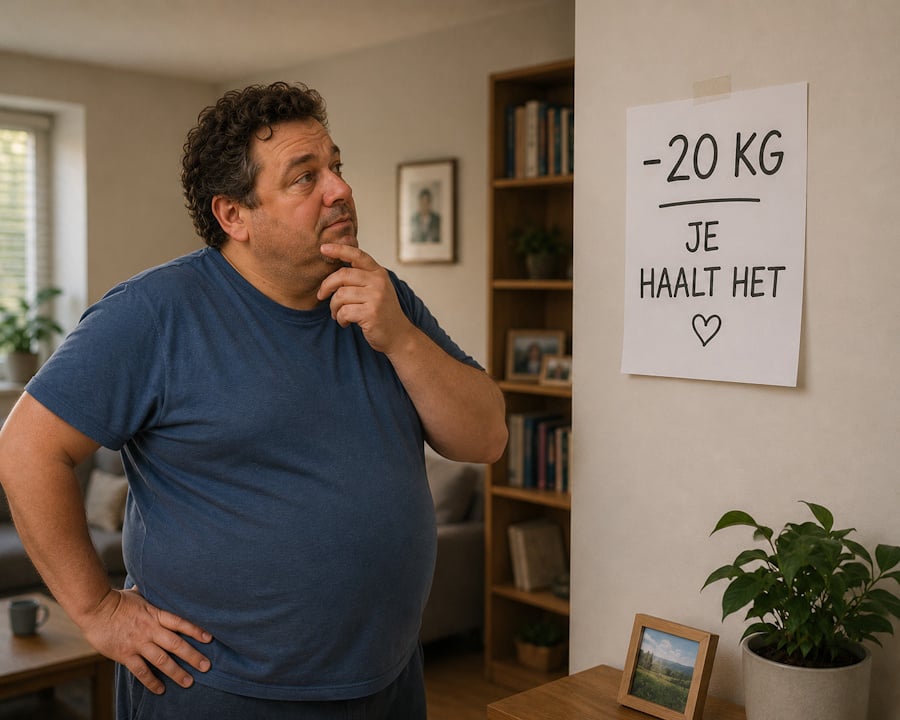
Many people place high demands on themselves. They feel they have to perform their new behaviour perfectly.
Skipping a walk feels like failure. Having a sweet treat feels like failure. Staying up too late feels like failure.
This creates a dangerous pattern. One misstep becomes a reason to stop altogether.
A better question
Do not ask yourself:
“Have I done everything right today?”
Ask yourself:
“Am I still heading towards my goal?”
That makes behavioural change much more realistic and sustainable.
We often think that habits are mostly logical. In reality, emotions often play a major role. People do not just eat because they are hungry. Sometimes they also eat because they are stressed, sad or bored.
The same applies to other habits:
• scrolling on social media;
• drinking alcohol;
• procrastination;
• watching television endlessly.
The question behind the behaviour
Ask yourself:
What does this habit yield for me?
You often discover that a habit fulfils a need, such as relaxation, distraction or comfort.

After a relapse, many people react harshly to themselves.
They think:
• “How stupid of me.”
• “I never manage it anyway.”
• “I can't do this.”
That doesn't help.
A better response
Say rather:
“Today didn't go so well. Tomorrow I'll pick it up again.”
People who are kind to themselves often sustain changes for longer.
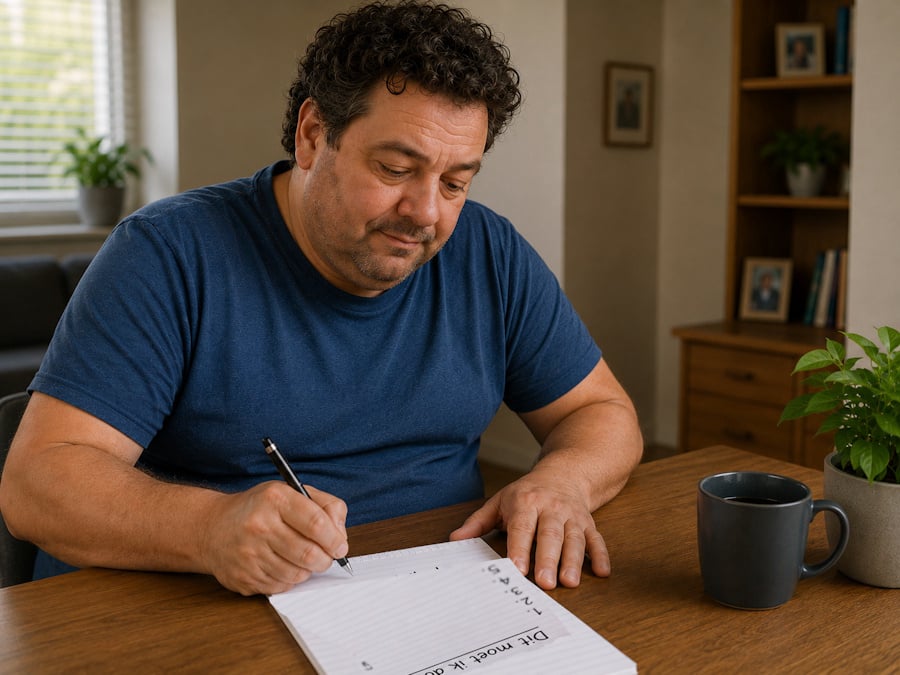
Choose one habit you want to work on over the coming months.
Not three habits at once.
Not five.
One.
My goal
What do I want to achieve?
My first step
What can I do today?
My surroundings
What changes can help me?
My support
Who can support me?
My trigger moments
When is the risk of relapse greatest?
My recovery plan
What am I going to do if things go wrong for once?
Summary
• Relapse is part of change.
• Perfection is not necessary.
• Emotions play an important role in habits.
• Small steps are better than no steps.
• Preparation helps to handle difficult moments.
• Be gentle with yourself.
• Create a concrete action plan.
What does this mean for me?
Changing is not a race that you only win if everything goes perfectly. Everyone has difficult days. The most important thing is that after a setback you keep going. Success is not created by one big decision, but by small choices that you make again and again. It is precisely those small steps that ultimately lead to lasting change.
This also aligns better with the style of the earlier chapters: shorter blocks, clear subheadings and a concluding “What does this mean for me?”. That makes for much more pleasant reading in an online course.
Answer: Because change usually happens with ups and downs and not in a straight line.
Answer: The belief that you are either doing something perfectly or have completely failed.
Answer: Because many habits fulfil needs such as relaxation, distraction or comfort.
Answer: Temporarily lower the bar and take a small step.
Answer: Being kind to yourself and starting over the next day.