Science today for a healthier tomorrow

Introduction

Many people think that successful behaviour change is mainly about willpower. They admire people who go for a run every morning, eat healthily or maintain a habit for years. It seems as though these people possess an enormous dose of discipline.

Yet when researchers study successful behaviour change, they discover something striking. Successful people often do not possess more willpower. They have simply arranged their environment more cleverly. They make healthy behaviour easier and unhealthy behaviour harder. They understand how habits work and use that knowledge to their advantage.

That is good news!

Because it means that behavioural change does not depend exclusively on character or perseverance. There are practical techniques that anyone can apply.
In this chapter we look at three powerful tools:
• the influence of your surroundings;
• the power of identity;
• the support of other people.
Together, they form a solid foundation for lasting change. 

The power of the environment

When people want to change, they often focus their attention on themselves.
They think:
“I need to be stronger.”
“I need to have more discipline.”
“I need to try harder.”
Yet research shows that our environment has a massive influence on our behaviour.
Much more than we often realise.

Just think of a bowl of biscuits sitting visibly on the table.
The chance of you grabbing a biscuit increases.
Not because you've become weaker.
But because the temptation is ever present.

All sorts of situations

A sweet jar on the desk increases the likelihood that you will snack.

The reverse works as well.
A bicycle ready and waiting in the garage makes getting active easier.
A fruit bowl on the table encourages healthier choices.
A book visibly lying next to the chair increases the chance that you will read.
Our behaviour is constantly influenced by signals from our environment.
Often that happens without us noticing.

Therefore, successful change often does not start with motivation, but with adjusting the environment.

Make desired behaviour easier

A common mistake in behavioural change is that people make things unnecessarily difficult for themselves. They rely entirely on willpower.
But willpower gets depleted. That's why it often works better to make healthy behaviour as simple as possible. 

Suppose you want to exercise more.
Then it helps to:
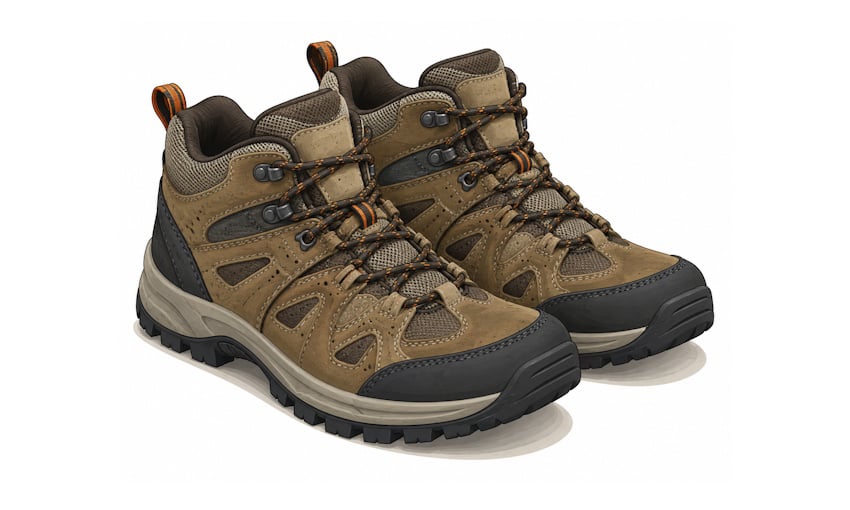
• to get walking boots ready;
• to schedule regular walking times;
• to choose a walking route that is close by.

Do you want to eat more healthily?
Then you can:
• display healthy products prominently;
• making unhealthy snacks less accessible;
• planning healthy choices in advance.

Do you want to spend less time on social media?
Then you can:
• turn off notifications;
• removing apps from the home screen;
• agreeing on fixed times to use your phone. 

The aim is not to constantly fight against yourself. The aim is to make the right choice easier. The less resistance a new habit creates, the greater the chance that it will endure.

easy at that time…

Identity: the hidden driver behind change

One of the most interesting insights from behavioural psychology is about identity.
Many people focus exclusively on behaviour.
For example, they say:
“I try to stop smoking.”
“I try to move more.”
“I try to live more healthily.”

That sounds logical.
Yet there is a problem hidden in it.
The word “try”suggests that the new behaviour is not yet truly part of who someone is.

Relationship with self-image

Researchers discovered that sustainable change often occurs when not only the behaviour changes, but also the self-image.
Compare the following statements.

Variant 1
“I'm trying to stop smoking.”

Variant 2
“I'm not a smoker.”

The difference seems small. But psychologically it is big. In the first case, someone continues to see themselves as a smoker. In the second case, smoking is no longer part of one's identity. The same applies to other habits.

• I am trying to work out versus
• I am someone who moves.

• I am trying to eat healthily versus
• I am someone who takes good care of their health.

• I am trying to read more versus
• I am someone who loves to read.

When behaviour aligns with identity, it becomes easier to maintain. People naturally like to act in a way that fits their self-image. Watch the following video and check whether the tips fit with what we have just covered.

A question for yourself

Think of a habit you want to develop.
Which identity goes with that?
Perhaps you do not want to walk alone.
Perhaps you want to become someone who lives an active life.
Perhaps you don't just want to eat more healthily.
Perhaps you want to become someone who is health-conscious.

That difference may seem subtle, but it can be a powerful engine for change. 

The influence of others

People are social creatures. We are constantly influenced by the people around us. Often more than we realise ourselves.
Research shows that behaviour can be contagious. When colleagues eat healthily, it influences your choices. When friends exercise regularly, the likelihood of you also becoming more active increases. When a partner supports a change, the chance of success increases significantly.

That does not mean that you are dependent on others. But it does mean that social support can play an important role. Change often becomes easier when you do not have to do it alone. 

Now look at the following video. Which points do you recognise?

Social support in practice

Social support can take various forms.
Someone can:
• showing interest;
• encourage;
• practising together;
• contributing ideas for solutions;
• showing understanding in the face of setbacks.

Sometimes it helps just knowing what someone is working on.
Your goal thereby becomes more concrete and visible.
Many people find that they keep going more easily when they share their plans with a partner, friend or colleague. 

Choose a change goal that suits you

Many good resolutions fail because they are too big, too vague or too ambitious. For example, people say: “I want to live more healthily.”
That sounds lovely. But what does it actually mean? Behaviour change usually works better when goals are concrete.
Compare:

1. Vague goal
I want to exercise more.

2. Concrete goal
I walk for twenty minutes every Monday, Wednesday and Friday.

The second goal immediately makes clear what you are going to do. As a result, it becomes easier to take action. 

A good change objective is:
• clear;
• feasible;
• concrete;
• tailored to your situation.

It doesn't need to be grand.
In fact, small goals often have the greatest chance of success.

What does this mean to you?

Perhaps the most important lesson from this chapter is that you don't have to solve everything with willpower.
Many people view behavioural change as a continuous struggle against themselves.

However, research shows that there is a smarter approach.
You can:
• adapting your environment;
• making desired behaviour easier;
• working on an identity that suits your goals;
• seeking support from other people.

As a result, you have to rely less often on motivation alone.
Change then ceases to be a daily power struggle, but becomes a process in which you help yourself to make better choices.

In the following chapter, we look at a topic that almost everyone has to deal with: difficult moments. We discover why relapse is normal, what role emotions play and how you can prevent a temporary slip-up from turning into the end of your change process.

Answer first and only then click on the question to see what our answer is

Answer: Because environmental cues are constantly influencing our behaviour.

Answer: For example, setting out your walking boots and scheduling regular walking times.

Answer: Because behaviour is easier to maintain when it fits how you see yourself.

Answer: By encouraging, thinking along and offering support.

Answer: It is clear, achievable, concrete and fits your situation.