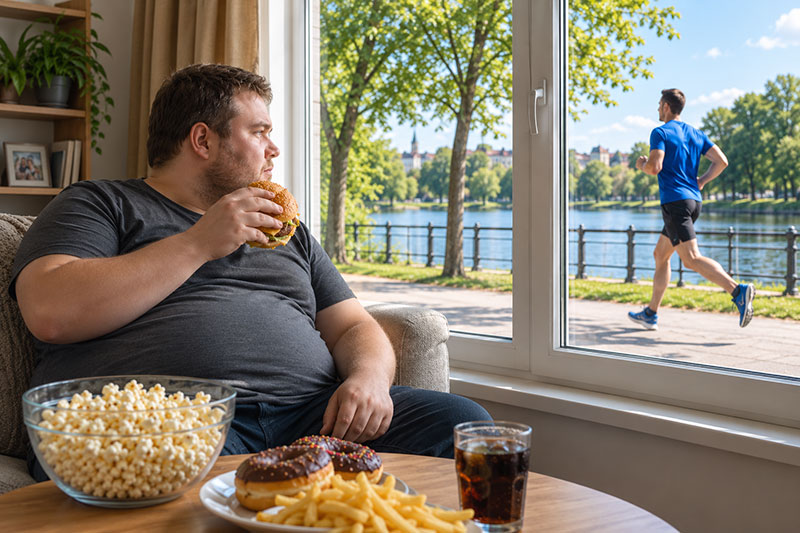
Why make it so difficult?
From idea to reality

Do you recognize this?
Almost everyone has tried to change a habit at some point. Maybe you wanted to exercise more, eat healthier, lose weight, quit smoking, or sleep better.
Often such changes begin with great enthusiasm.
You have a clear goal in mind and are motivated to get started on it.
Yet many people find that it’s more difficult than expected. Over time, old habits creep back in. That can be frustrating.
Some people even conclude that they lack sufficient discipline or that they are unable to change.
Losing weight is one of the most well-known topics we deal with when breaking barriers. Many people have made numerous attempts… unfortunately without success.
Fixed patterns
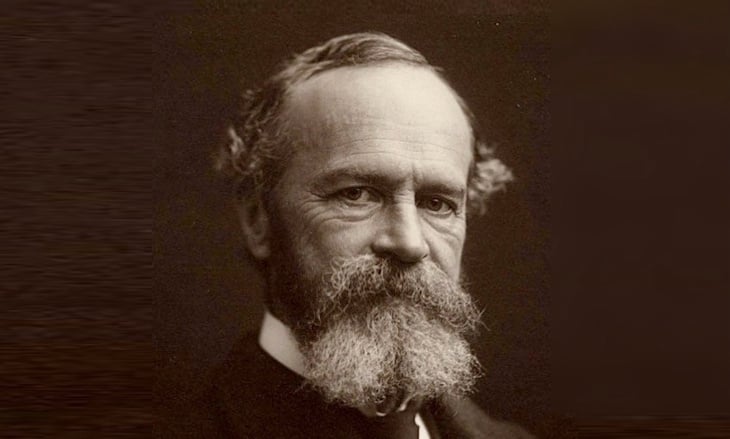
One of the first famous psychologists to study habits and behavioral change was William James.
As early as 1890, he wrote that a large part of our lives consists of habits. That is why change is often difficult: old patterns are deeply ingrained.
That is the subject of this chapter and one thing is certain: this chapter is interesting for everyone, because everyone has learned certain behaviors.
Our first observation. During our training, we are dealing with patterns that are partly unconsciously ingrained. Although the video is not directly about behavior, we see beautiful examples of how certain patterns (in this case thoughts) are unconsciously ingrained.
Many people view difficulties around change as "weakness". However, change is not difficult because people are weak. Change is difficult because our brains work in a certain way. When we understand how that mechanism works, it also becomes clear why so many good intentions fail and what we can do to increase the chance of success.

Our brain loves routines
Our brain is a miraculous organ. It processes enormous amounts of information every second. That takes energy.
To save energy, the brain tries to automate as many actions as possible.
Think about your morning routine. You probably get up, go to the bathroom, brush your teeth, and get dressed without thinking much about it.
That is a major advantage. If you had to consciously think about every step every morning, that would cost a lot of time and energy.
The same applies to countless other actions:
• driving;
• making coffee;
• shopping;
• watching television;
• take your phone.

Many of these activities are largely automatic.
Psychologists talk about “habit formation.” When behavior is repeated often enough, it creates a kind of fixed pattern in the brain. The behavior becomes easier and requires less mental effort over time. We saw this already in the previous chapter in the experiments of Pippa.
Intentionally manipulated behavior is the basis of “automatic action”.
One of them automatically runs to the refrigerator after dinner.
The other person picks up their phone without thinking, as soon as a moment of boredom arises. Again, someone else immediately sits on the sofa as soon as they get home.
These habits were not consciously chosen at that moment. They are the result of many repetitions.
Habits are therefore not good or bad. The problem arises when a habit no longer contributes to what we actually want to achieve.
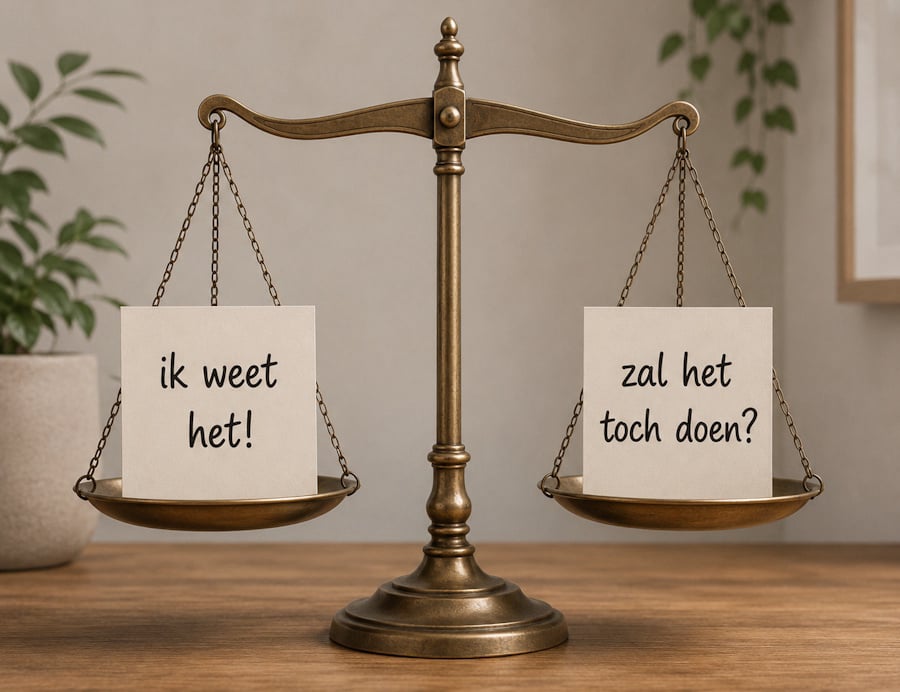
The battle between knowing and doing
Many people think that behavior is mainly driven by consciously following what you know.
That seems logical.
When you know that exercise is healthy, don't you still go and exercise?
When you know that smoking is harmful, don’t you stop smoking?
When you know that sleep is important, do you still go to bed earlier?
We all know how different life can be…
To get more clarity, we often make a distinction between two systems.

(1) The system based on reflection
This system supports us in thinking, planning, and formulating goals.
The system says:
• I want to live a healthier life.
• I want to move more.
• I want to lose weight.
• I want to experience less stress.
The system looks ahead and thinks about the future.
The illustration also shows a to-do list. But these goals are of course easily achievable. The goals we see on the to-do list here do not conflict with obstacles.
From this we can also conclude that there are different types of goals!

(2) The automatic system
In addition, there is a much older and faster system.
That system reacts to:
• emotions;
• habits;
• desires;
• temptations.
Just look at the illustration.
The system says:
• Just have another bite.
• Everyone does it.
• Besides, it’s part of being sociable
– Moreover… it’s really delicious
• Today, skipping is okay.
• Tomorrow I’ll start again.

hundreds of books full of promises… do they help?
A curious situation
Much of our daily behavior is controlled by this automatic system. Therefore, a curious situation often arises.
During the day, someone decides to eat healthier. He reads an article about nutrition, resolves to eat less, and thinks: “From today on, I’ll do things differently.” But in the evening, that same person is sitting on the couch with a bag of chips.
Not because that person is unreasonable. But because the automatic system appears to be stronger at that moment than the rational plan.
That automatic system works quickly and without much thought. It reacts to habits, temptations, emotions, and situations that we recognize. The bank, the television, and the bag of chips together form a familiar pattern. The body and the brain switch, as it were, automatically to the familiar routine. This shows that knowledge alone is not enough. Our behavior is not only determined by what we know, but also by habits that have existed for years.
An important step
An important step towards behavioral change is therefore understanding that knowing and doing are two different things. Knowledge is important. But knowledge alone usually does not change behavior.
The art is therefore not only to know what is good for us, but above all to ensure that healthy behavior becomes an obvious part of everyday life.
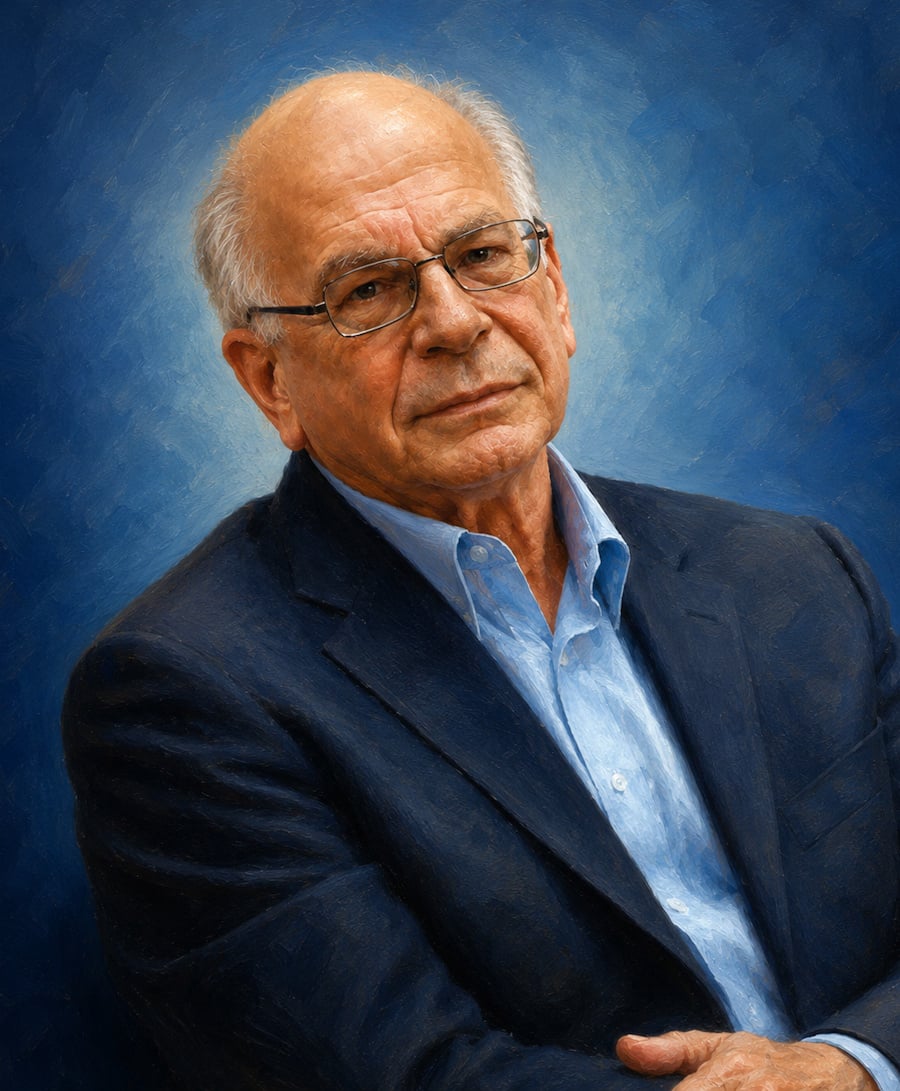
Daniel Kahneman
Daniel Kahneman: why not knowing enough is not enough
The renowned psychologist and Nobel Prize winner Daniel Kahneman showed that our behavior is not only driven by conscious thought. In his famous book Thinking, Fast and Slow, he describes two ways in which our brain works.
The first system works quickly, automatically, and largely unconsciously. It responds to habits, emotions, temptations, and immediate rewards. The second system works more slowly and consciously. It helps us make plans, set goals, and think about the future.
Many health problems arise because these two systems do not always want the same thing. The conscious system says: “I want to lose weight.” The automatic system says: “That cake looks delicious.” The conscious system says: “I’m going to exercise tonight.” The automatic system says: “I’d rather stay on the couch.”
The examples in this course are based on these well-known insights from Kahneman. They show that behavioral change is not just about knowing what is good for you, but above all about understanding how our brain works and how we can influence our behavior step by step.
Optional:
An engaging animation about the famous book by Kahneman

The pitfall of direct reward
One of the biggest obstacles to change has to do with reward. Our brain loves immediate results.
When you eat a piece of cake, you immediately get a pleasant feeling.
When you look at social media, you immediately get new incentives. When you sit on the couch, you don't have to exert any effort. The reward comes immediately. The disadvantages often come much later.
Weight gain does not occur from a single piece of cake. Poor fitness does not occur from skipping a single workout.
Health problems often only develop after years have passed.
For our brain, that is difficult. From an evolutionary perspective, that is understandable. Our ancestors lived in a world where immediate opportunities were important for survival.
Food had to be eaten when it was available.
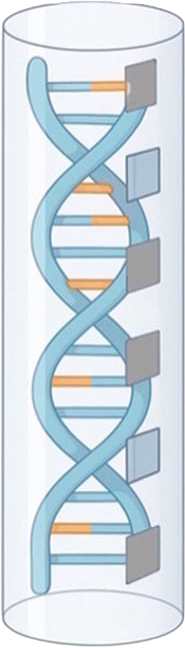
We know that nowadays the adoption of patterns like a certain lifestyle actually has reflections in the epigenome.
Changes in the epigenome
We know that lifestyle patterns influence the epigenome.
This applies, among other things, to:
smoking;
move;
nutrition;
sleep;
chronic stress;
alcohol use.
When researchers look at DNA methylation, they see that people with different lifestyles also have different epigenetic profiles.
That is now very well substantiated.
Important conclusions
The epigenome shows that long-term behavioral patterns not only have psychological consequences, but also measurable biological consequences. Moreover, it appears that people can differ significantly biologically in the way they respond to the same lifestyle.
That opens the door to something that was hardly possible before:
a more personal approach in driving behavioral change.
Perhaps that is ultimately the most important contribution of epigenetics to this topic: not a new theory about habits, but the ability to see which barriers for a specific person weigh the most biologically.

Why motivation often falls short
Many people believe that success depends primarily on motivation.
They wait for the right moment. On a day when they feel energetic. At a moment when they are truly ready.
The problem is that motivation is not stable. Sometimes you feel strong and determined. On other days, you are tired, busy, or distracted.
When behavior is completely dependent on motivation, it becomes vulnerable.
We often see this with good intentions. In January, people are enthusiastic. In February, it becomes more difficult. In March, many of the good intentions have disappeared.
Successful change usually works differently.
People who permanently change their behavior rely less on motivation and more on routines. They make commitments to themselves. They build established habits. They ensure that healthy behavior becomes part of their daily life. This way, they don’t have to make the same decision every day. And that is exactly where the power of habits lies. When desired behavior becomes a habit, it takes much less energy to maintain it. And that is a beautiful bridge to the next chapter: “what works”.

Answer first and only then click on the question to see what our answer is
Question 1: Why is changing a habit often more difficult than people think?
Answer: Because our brain likes to save energy. Therefore, many actions are performed automatically over time. Old habits are therefore deeply ingrained and take time and effort to change.
Question 2: What is the difference between the conscious system and the automatic system?
Answer: The conscious system helps us plan, set goals, and think about the future. The automatic system mainly responds to habits, emotions, desires, and temptations, and is more alive in the here and now.
Question 3: Why does knowledge not automatically lead to different behavior?
Answer: Because knowing and doing are not the same thing. Someone may know very well what is healthy, but at the moment they still choose to engage in behavior that immediately brings pleasure or convenience.
Question 4: Why does direct reward form a trap in behavioral change?
Answer: Because our brain reacts strongly to immediate benefits. A tasty snack, a moment of relaxation, or a pleasant stimulus immediately gives a pleasant feeling, while the negative consequences often become apparent much later.
Question 5: Why is it dangerous to rely solely on motivation?
Answer: Because motivation changes constantly. On some days you feel energized and motivated, while on other days you don’t. Therefore, routine and habits are often more important for lasting behavioral change than motivation alone.