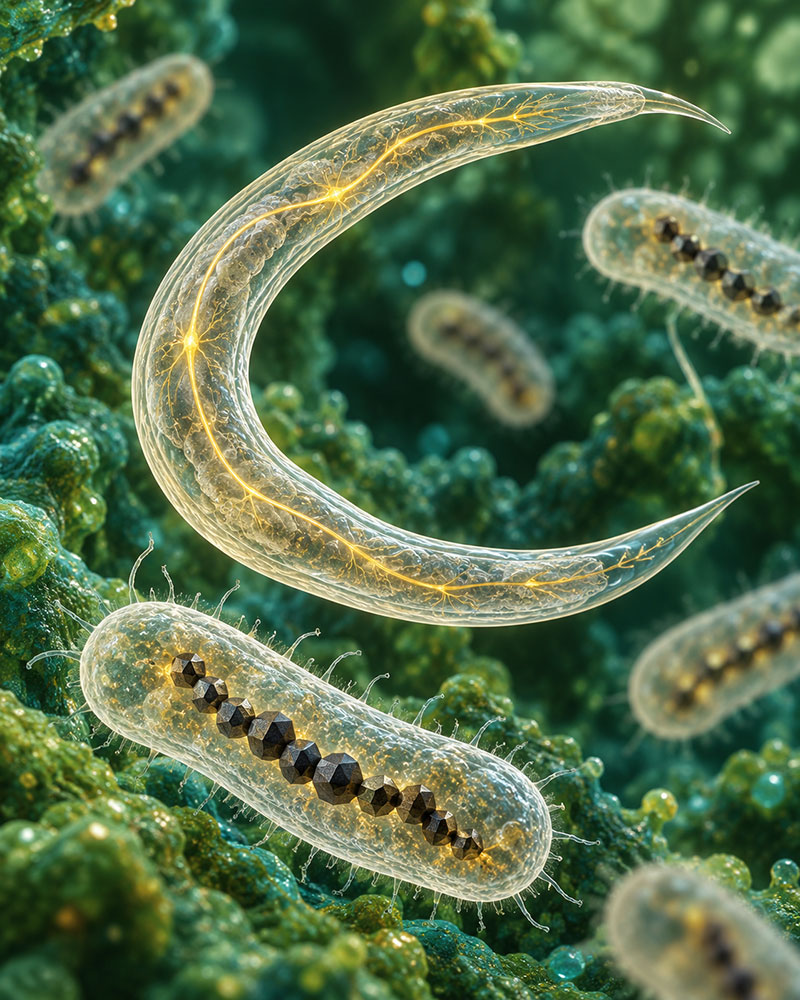
Researchers have discovered that a special bacterium that produces magnetic properties can significantly extend the lifespan of nematode worms. In their research, these worms lived more than 40 percent longer than normal. In addition to the longer lifespan, the bacterium also improved the health of their nervous system and intestines.
The prolongation of life was associated with the suppression of a certain type of cell death, called ferroptosis. Ferroptosis occurs due to an excess of iron in the body, which causes harmful reactions due to so-called oxidative stress. This helps explain why the worms not only lived longer but also remained fitter.
This research shows how addressing aging processes at the cellular level can contribute to a healthier old age. It involves reducing cell damage caused by free radicals and metal accumulation. Such insights are important for developing better strategies for healthy aging in humans.
Although the research has been conducted so far on worms, it offers hope for future applications in humans. It also encourages further research into natural ways to support bodily functions and combat age-related ailments.
This is interesting for anyone who wants to understand which factors contribute to a long and vibrant life.
Source: Original article