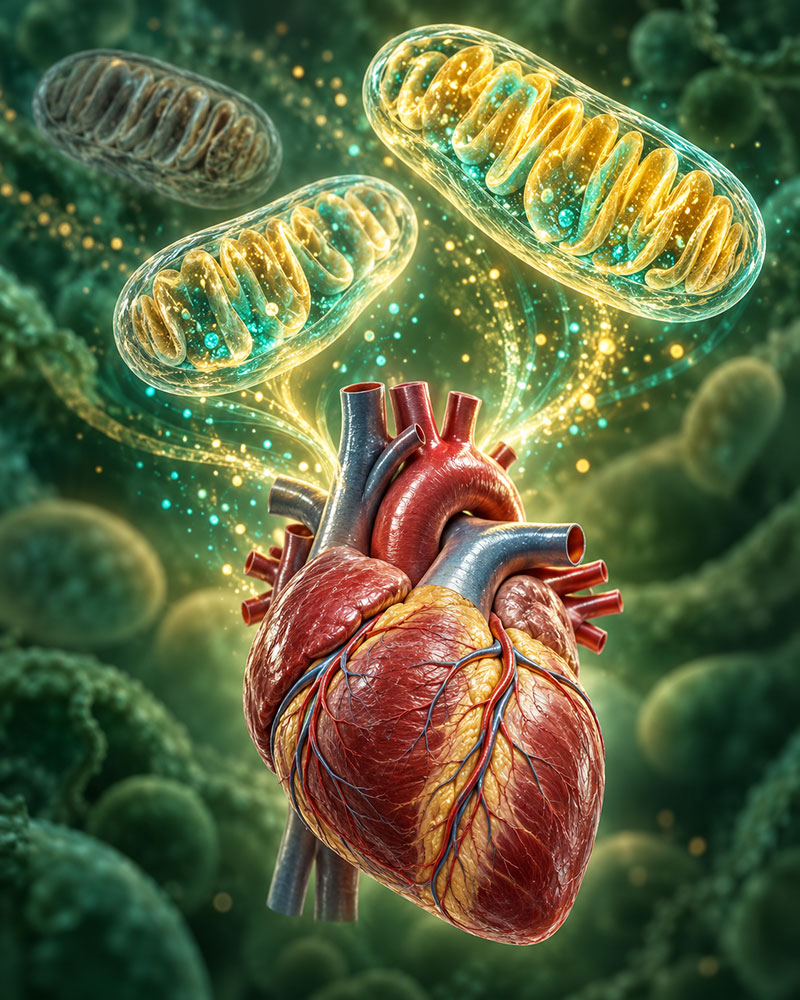
As we age, the damage to our cells increases. Especially the energy factories in cells, the mitochondria, function less well. This can reduce the heart’s energy supply and contribute to age-related conditions and diseases. Researchers have now gained new insight into how rejuvenating mitochondria can counteract these problems.
It turns out that a substance called BNIP3, which is involved in cleaning up damaged mitochondria, is present in excessive amounts with age. This interferes with the natural process of breaking down and replacing defective mitochondria. As a result, damaged mitochondria accumulate in heart cells, negatively affecting the energy state of the heart.
In experiments with mice undergoing accelerated aging, administering fresh mitochondria derived from stem cells led to improved heart function. The renewed mitochondrial apparatus could thus help counteract the harmful accumulation. This effect was associated with a reduction in BNIP3, which allowed the clearance process to proceed more effectively.
These findings may be important for developing new treatment methods that slow down the aging of heart cells. A healthy functioning heart with sufficient energy is essential to remain vital longer and to age healthily. The research is still in its early stages and was conducted on animals and cell cultures, but it offers promising starting points.
Addressing mitochondrial damage plays a key role in maintaining quality of life in later life.
Source: Josh Conway