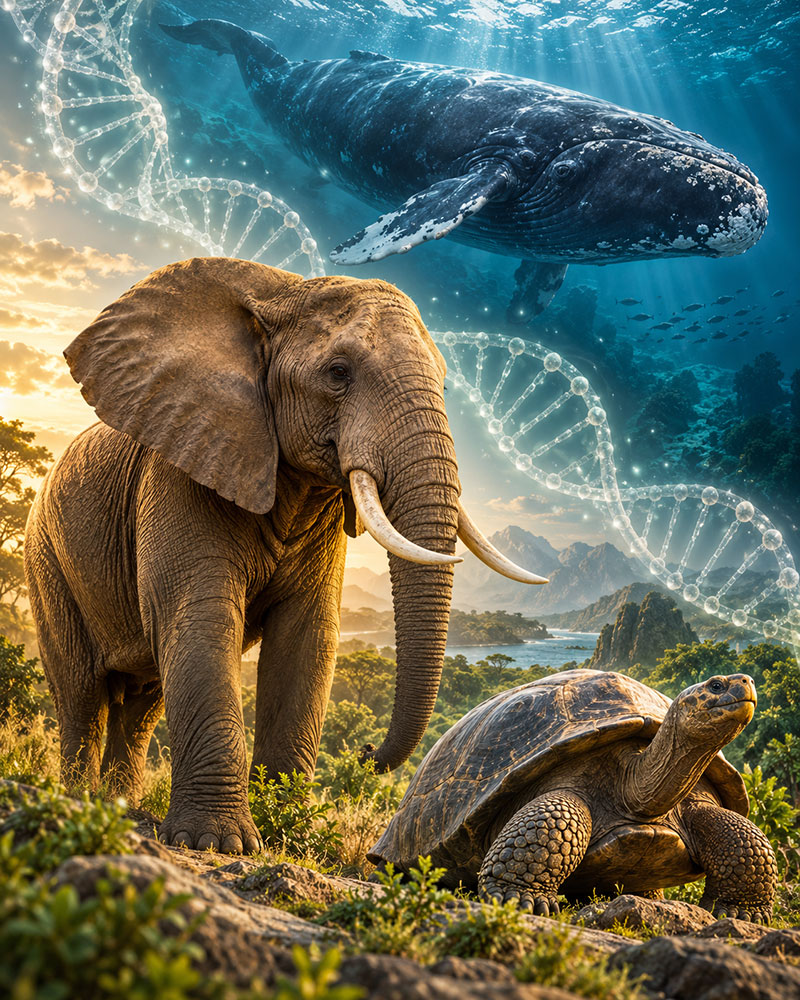
Researchers have examined the DNA of animals that age and compared it with that of animals that live shorter lives. They discovered that genetic parts related to cancer in long-lived animals often remain virtually unchanged. This means that certain genes, which are involved in the development of cancer, are better protected in these animals against changes that can cause cancer.
Furthermore, the way genes are turned on or off also appears to be different in long-lived animals. These epigenetic changes influence how cells respond to potential carcinogens. Long-lived animals such as elephants and bats have a natural protection that ensures that cancer develops less frequently.
This research helps us better understand how to prevent cancer from developing and contributes to the goal of a healthier and longer life. The insights about genes and their activity provide points of reference for future treatments and prevention in humans.
Healthy aging is also linked to the reduction of diseases such as cancer, and this research increases our knowledge of how this can occur naturally.
Source: Reason