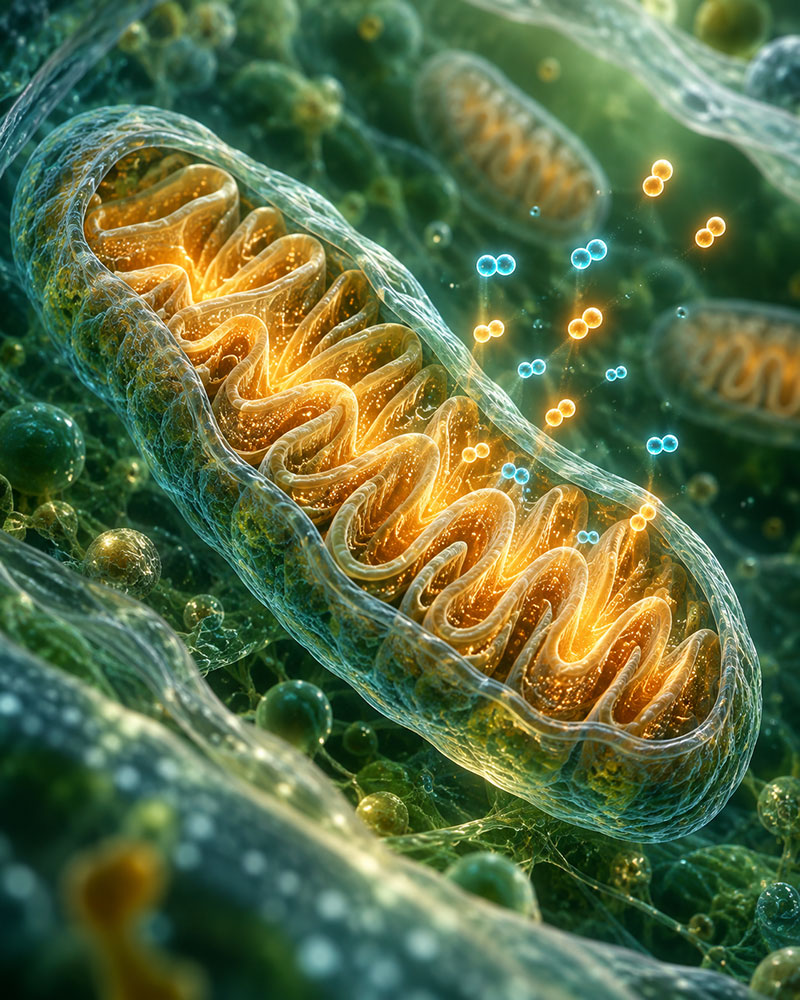
Researchers are looking at how certain substances in our cells contribute to aging. Mitochondria, the energy factories of cells, not only produce energy but also small amounts of reactive oxygen species. One of these is superoxide. This substance can damage cells, but also appears to have a signaling function.
Research with nematodes, a type of worm, shows that a slight increase in superoxide leads to better cell response. They go on extra repair and self-maintenance, which ultimately has a positive effect on lifespan. This explains why a little stress in the mitochondria can help to stay healthy longer.
Strengthening the repair mechanisms in cells is an important part of healthy aging. Understanding how these processes work can provide valuable information for developing new methods to slow down aging.
This research contributes to a better understanding of the complex balance between cell damage and repair. It shows that small adjustments in our cellular metabolism can help us become more vital as we age.
Source: Reason