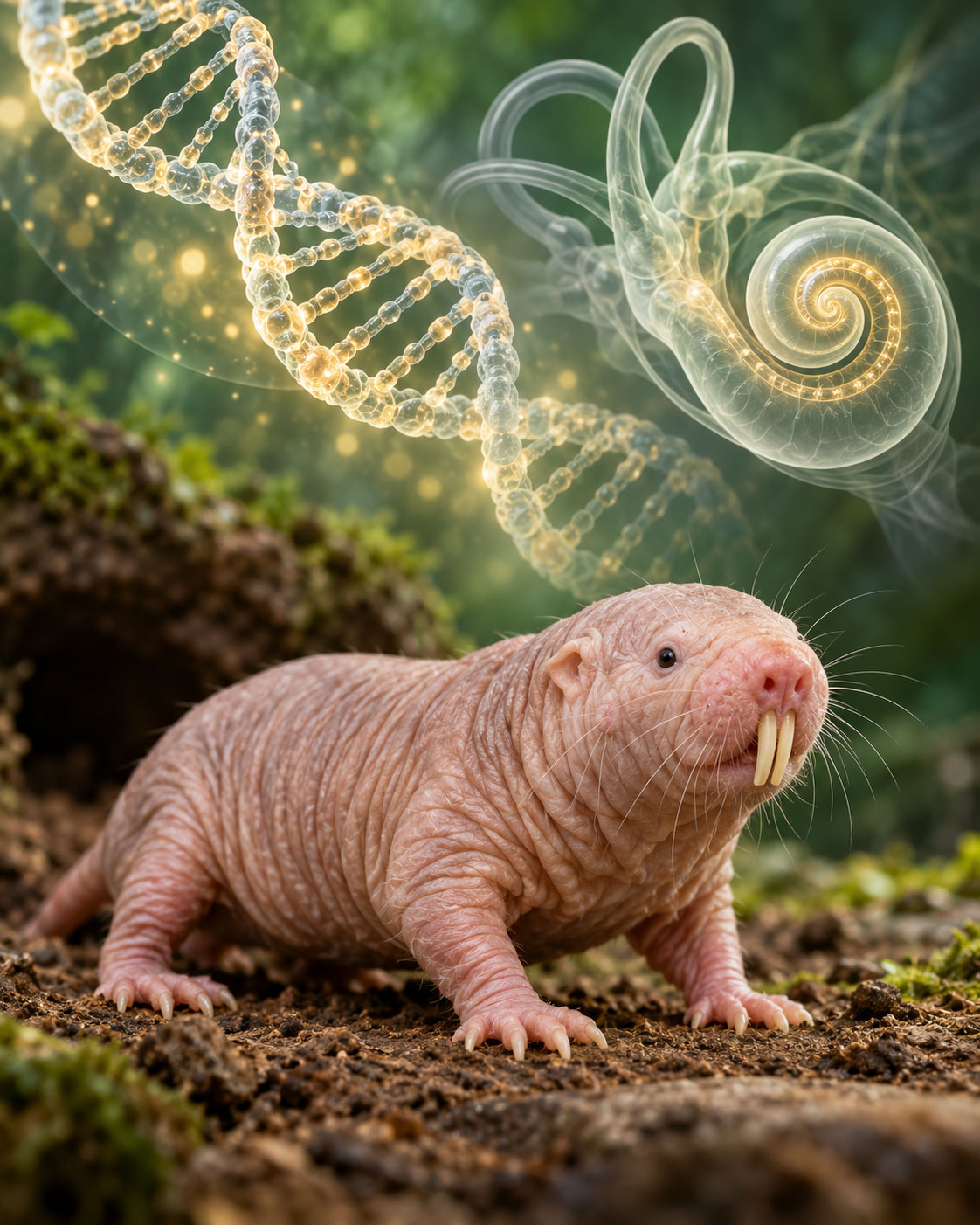
Scientists are studying the genes of long-lived animals to better understand the aging process. One of these animals is the naked mole rat, known for its remarkable health and long lifespan. They contain a substance called hyaluronan, which is found in the tissue between cells and may contribute to their resilience.
Researchers have created mice that produce the same amount of hyaluronan as the naked mole rat. These mice appear to age healthier and have a longer period of good health. This research shows that certain genes from long-lived animals can have positive effects on health as we age.
However, this improvement does not seem to apply in all areas. For example, the modification of hyaluronan in the mice has no effect on age-related hearing loss. This latter is a common problem in older adults and is therefore not reduced by this gene modification.
This research contributes to knowledge about healthy aging and shows that the transmission of certain genes can indeed have an impact on health, but that some aspects of aging remain complex. Understanding these processes is important in order to find new ways to make life more enjoyable in later life.
Source: Reason