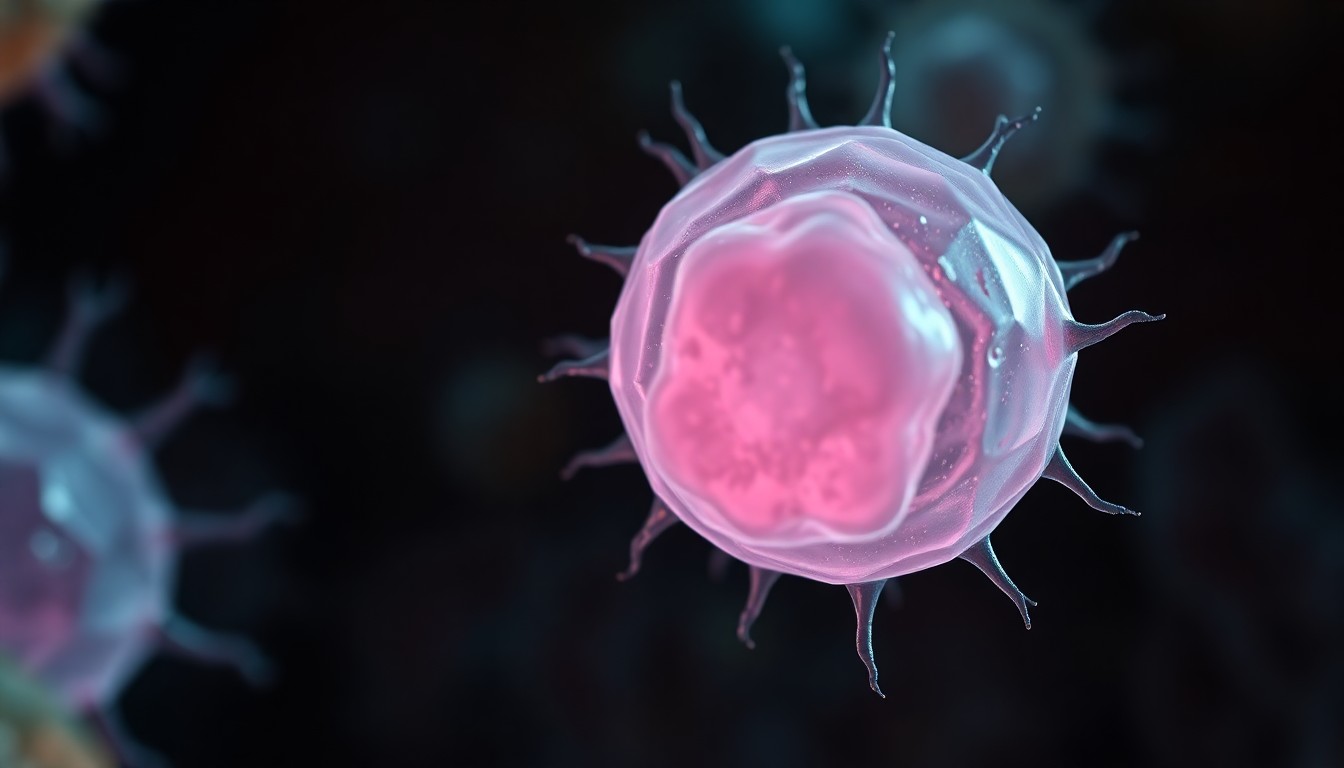
Our body cells have a natural limit to how often they can divide. When they reach this limit, they stop dividing and change their function. We call these cells senescent cells. They grow larger and begin to secrete substances that stimulate inflammation and cell division. This process plays a role in tissue repair and protection against cancer.
In youth and during healthy functioning, the immune system ensures that these senescent cells are cleared away as soon as they have fulfilled their task. As we grow older, the functioning of our immune system deteriorates. As a result, these cells accumulate in the body. This accumulation disrupts the structure and functioning of tissues and contributes to age-related diseases.
The long-term presence of senescent cells can cause inflammation that we would rather avoid. Scientists believe that reducing these cells and improving the clearance process can help promote healthy ageing. In this way, tissue can function better and age-related complaints can potentially be reduced.
This insight helps to better understand how ageing occurs at the cellular level and why our body grows older. Research into senescent cells opens up new avenues for treatments that contribute to a longer, healthier life.
Source: Reason






