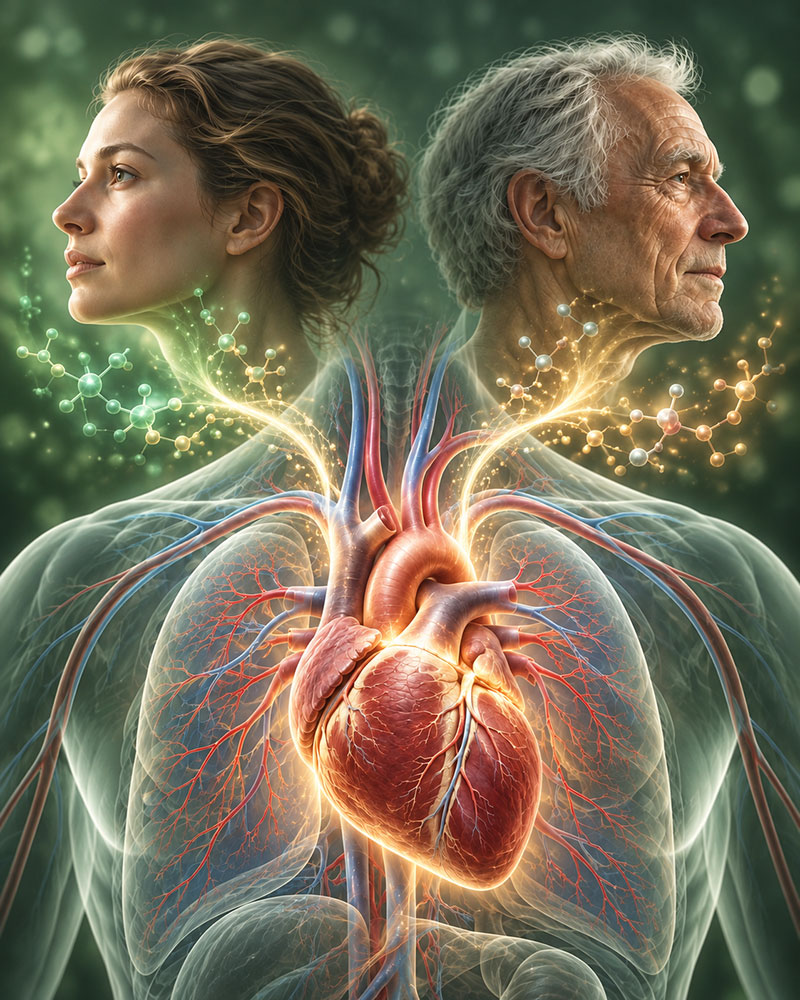
New research shows that the biological aging process of a transplanted heart is influenced by the age of the recipient. This means that a young heart placed in an older body can appear older faster, while an old heart can actually rejuvenate in a younger body. This effect was demonstrated in experiments with mice and was also confirmed with molecular data from human heart transplants.
The researchers studied mice whose hearts were replaced, but in which the original heart remained in the body. They then measured the biological age of the transplanted organ using epigenetic clocks. These clocks determine the molecular age through certain changes in the DNA. The results showed that the transplanted hearts closely resembled the recipient’s age in their molecular characteristics rather than the donor’s age.
In addition, genes involved in energy production in the cells, particularly in the mitochondria, were examined. These genes changed depending on the age of the recipient, indicating that the heart’s functionality also adapts to the new body. In humans, data from hundreds of heart transplants showed similar patterns.
These findings are important because they indicate that older donor hearts may be more suitable than previously thought. It could also mean that the aging process of organs is not static, but is influenced by the body in which they are located. For those who want to become healthier with age, this is promising news: it emphasizes the importance of a healthy living environment to keep organs young and vital for longer.
Source: Arkadi Mazin