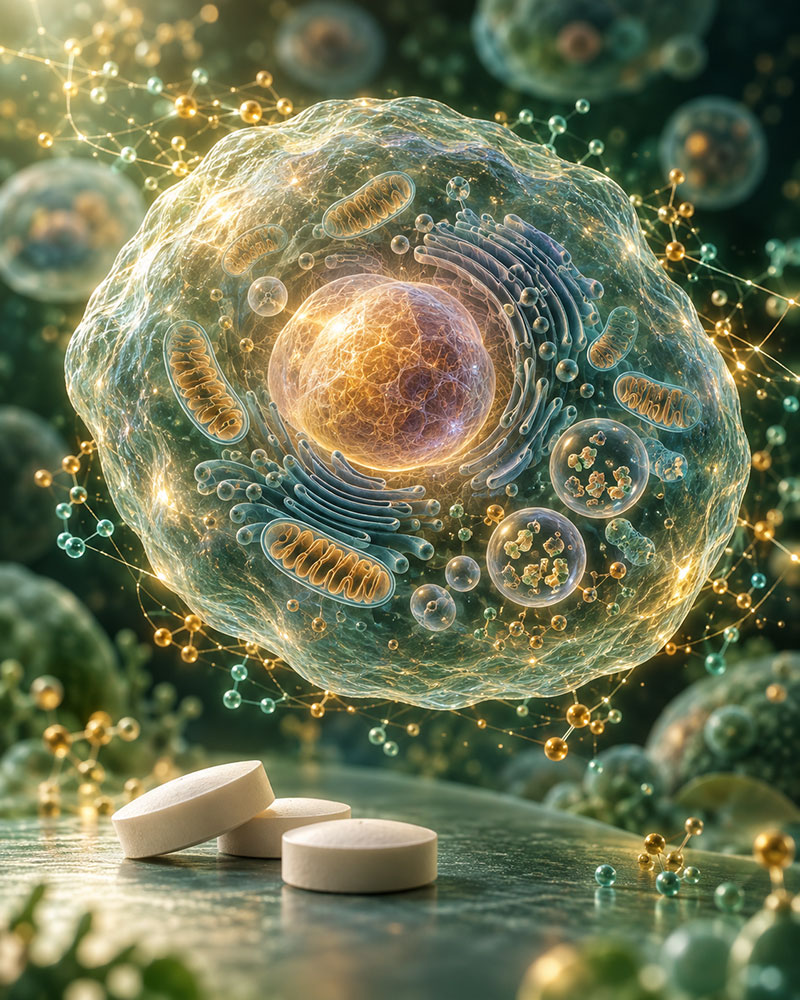
Research into the inhibition of mTOR, a substance in the body that regulates cell processes, shows promising results for slowing down aging. In particular, the drug rapamycin, which has been available for a long time and is inexpensive, is being studied for this purpose. In mice, this drug causes a lifespan extension of approximately 10 to 20 percent. This is promising, but more research in humans is still needed.
MTOR influences, among other things, a process of cell destruction called autophagy. This process helps to break down and reuse damaged parts in cells. By inhibiting MTOR, autophagy appears to work better, which can improve cell health and slow down the aging process. There are several studies that confirm this, but the effects are not the same in all parts of the body.
It is important to know that inhibiting mTOR is not simple. The best approach varies per tissue and situation, and not every method works equally well. Rapamycin is a first step, but better means with fewer side effects are being sought. It takes a lot of time and money to extensively test these new treatments in humans.
Despite the limitations, rapamycin, as a relatively inexpensive drug, can make a small but useful contribution to healthier aging. For now, its effect in humans has not been proven, but it offers an interesting opportunity to tackle the aging process. For anyone who wants to remain vital longer, following this research remains worthwhile.
Source: Reason