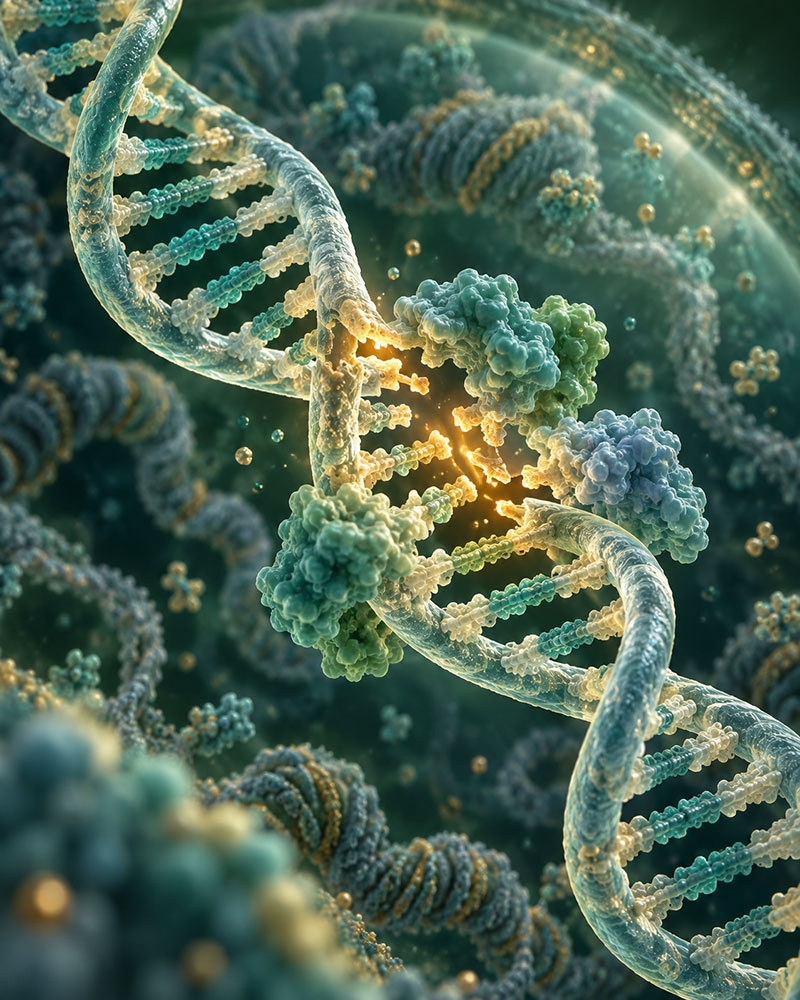
Researchers are increasingly interested in the role of DNA damage in aging. The idea is that repeated responses from the body to damaged DNA can lead to changes in the way our genetic material is managed. These changes, also known as epigenetic changes, occur more frequently as we age and can be an important cause of aging-related phenomena.
DNA, the carrier of our hereditary information, can be damaged over time by various factors. The body attempts to repair this damage, but repeated activation of this repair process can also lead to unwanted changes. This can contribute to reducing the functioning of cells and thus accelerating the aging process.
Interestingly, research into partially reversing these epigenetic changes is promising. We sometimes refer to such treatments as ‘anti-aging therapies’. They focus on restoring the original structure and function of DNA within cells and could help to counteract signs of aging.
Although the evidence that DNA damage and the response to it play a major role in aging is promising, not everything is yet clear. Therefore, scientists are looking at which studies are needed to better understand how these processes contribute to age-related conditions. This could eventually help develop better strategies for healthy aging.
Understanding the connections between DNA damage and aging is important for anyone who wants to stay healthy for longer.
Source: Reason