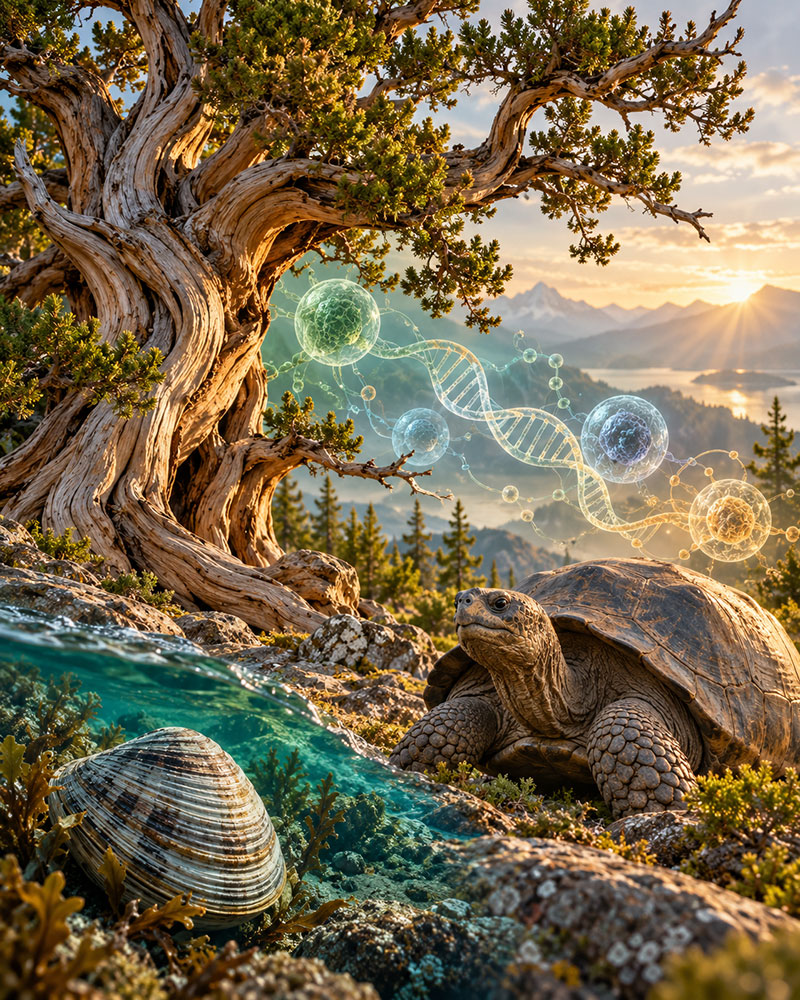
Scientists investigated which biological processes play a role in the lifespan of animals that can become very old, such as some plants and animals that live for more than 250 years. They looked not only at differences between species, but also at why individual animals within the same species live longer or shorter lives. It turns out that certain biochemical mechanisms play an important role in the ageing process, both at the species and individual levels.
Because ageing is a complex interplay of various processes, it is difficult to pinpoint exactly which factor has the greatest influence on lifespan. Researchers can find clues in the differences in bodily processes, but they cannot simply study one mechanism in isolation without other processes coming into play. This makes determining the primary cause difficult.
The study emphasises that the research into long-lived species can offer valuable insights. By understanding how the body slows down ageing, we might learn how to delay ageing in humans. This aligns well with the interest in healthy ageing and the search for ways to remain vital and active for longer.
For everyone who wants to maintain their quality of life at a later age, it is important to know that ageing is not a single process. There are multiple factors that determine how fast or slow the ageing process proceeds. More research in this area helps to better understand the complexity and develop new strategies for a longer, healthier life.
Source: Reason